Visit to Nellie & Girls — Cary, NC; Sept 19-22, 2014

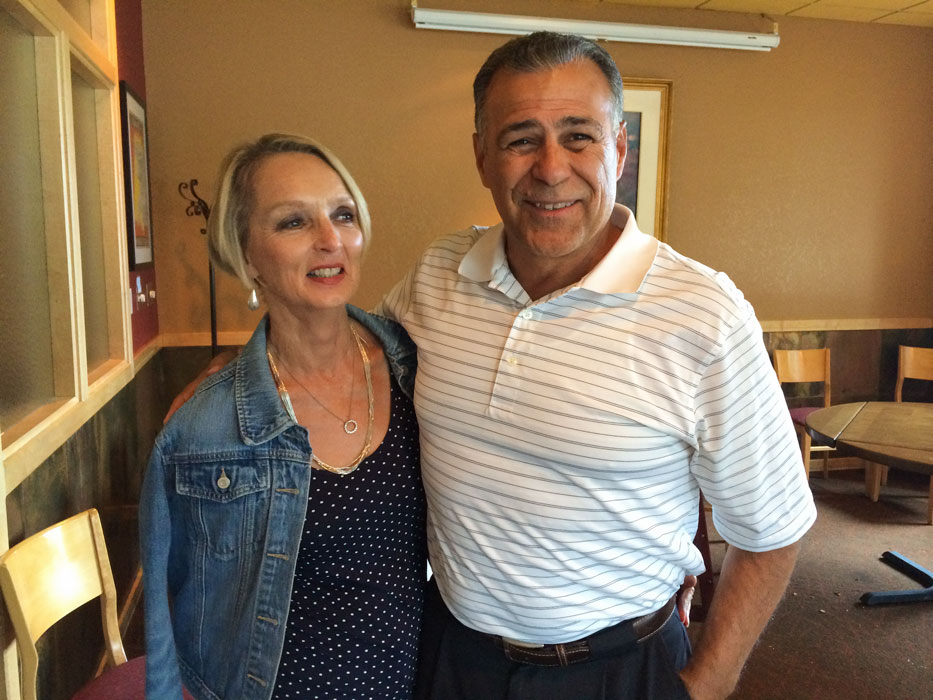
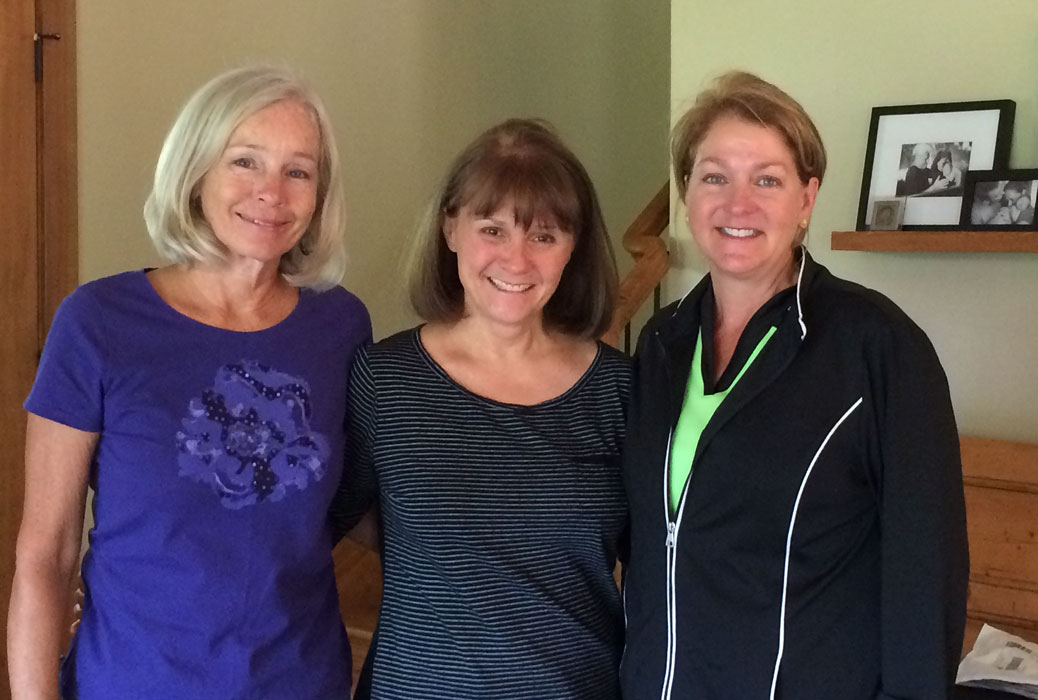
I flew from San Francisco to Raleigh, NC on Thursday, Sept. 19, and Barb flew in from Las Vegas the next day.  Nellie’s youngest daughter Jessie came home from school at Appalachian State University and her oldest daughter Katie, a resident of Cary, found time to visit with us as well.  And we finally got a chance to meet Nellie’s boyfriend Mike, who flew in from Atlanta to visit for the weekend.  We mostly hung around the house in order to maximize our brief weekend together, but there were trips to do a bit of shopping for home repair items and plants for the back porch and of course some last-minute grocery expeditions.  On Saturday night we all enjoyed decadent amounts of steak grilled on the back porch.

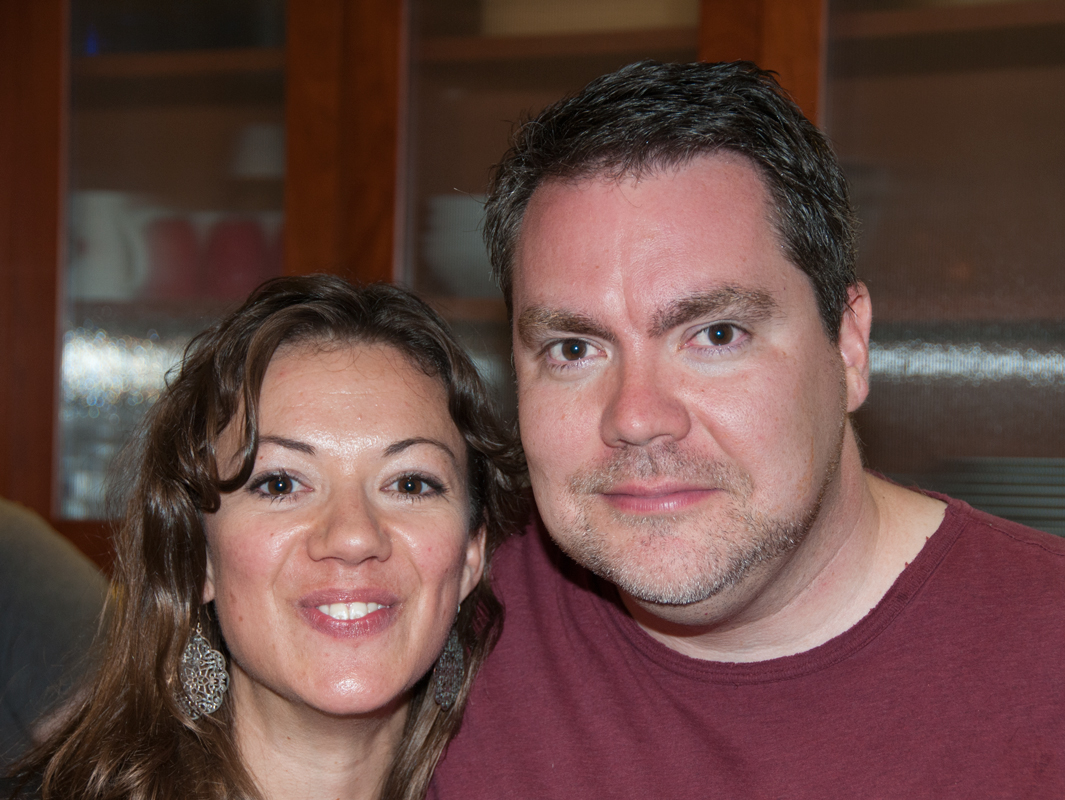
We had nice visits with the girls and were really impressed with Mike, who had to fly back on Sunday.  After he left, Nellie, Barb and I went for a walk in a large wooded municipal park.

All too soon, it was time to head further south.  Our “new” car was left in Las Vegas, so we rented a vehicle to drive one-way to Savannah.   But Savannah is another story for another post.

Las Vegas & San Francisco — September 12-19, 2014

When Barb and I had finished our tour of Hoover Dam, we continued on to Las Vegas to visit Barb’s dad Cliff.  While in Vegas we did some window-shopping for campers, but ended up more confused than ever as to what we might eventually purchase.

On a previous visit one of Barb’s sisters had left a recommendation for us to visit the Las Vegas Wetlands Park, and so on an especially hot day we impulsively ventured out into the noon heat to investigate the park on the Las Vegas Wash.   We found a surprisingly green park whose water source is a combination of runoff from all of Vegas and from reclaimed water from a treatment plant.  We saw little wildlife — maybe because it was so damn hot.  Duh.

I left Vegas before Barb, since I wanted to go see my son Wil, who lives in the famous Castro district of San Francisco, right behind the Castro Theater.  On the day before I left, Barb’s brother Dan and his partner Candy arrived in Vegas from Washington State, so I got to see them before departing.  Barb remained in Vegas in order to visit with her father and Dan and to help Cliff and Candy celebrate their birthdays.

Wil picked me up at the Frisco airport, of course.   I wish someone had taken a picture.  Wil’s car is a Lotus Elise.   If you aren’t familiar with that vehicle, it is a British-made two-seat sports car that has been favorably compared to an Alpha Romeo 4C or a Porsche Cayman.  (Click here.)  My bulging backpack just barely fit into the small trunk.  What to do with my soccer bag with the rigid spine?  There was no choice but to put me into the passenger seat and then put one end in my lap, with the rest of the long bag in a vertical position that rose above the level of the windshield.  Good thing the top was removed.

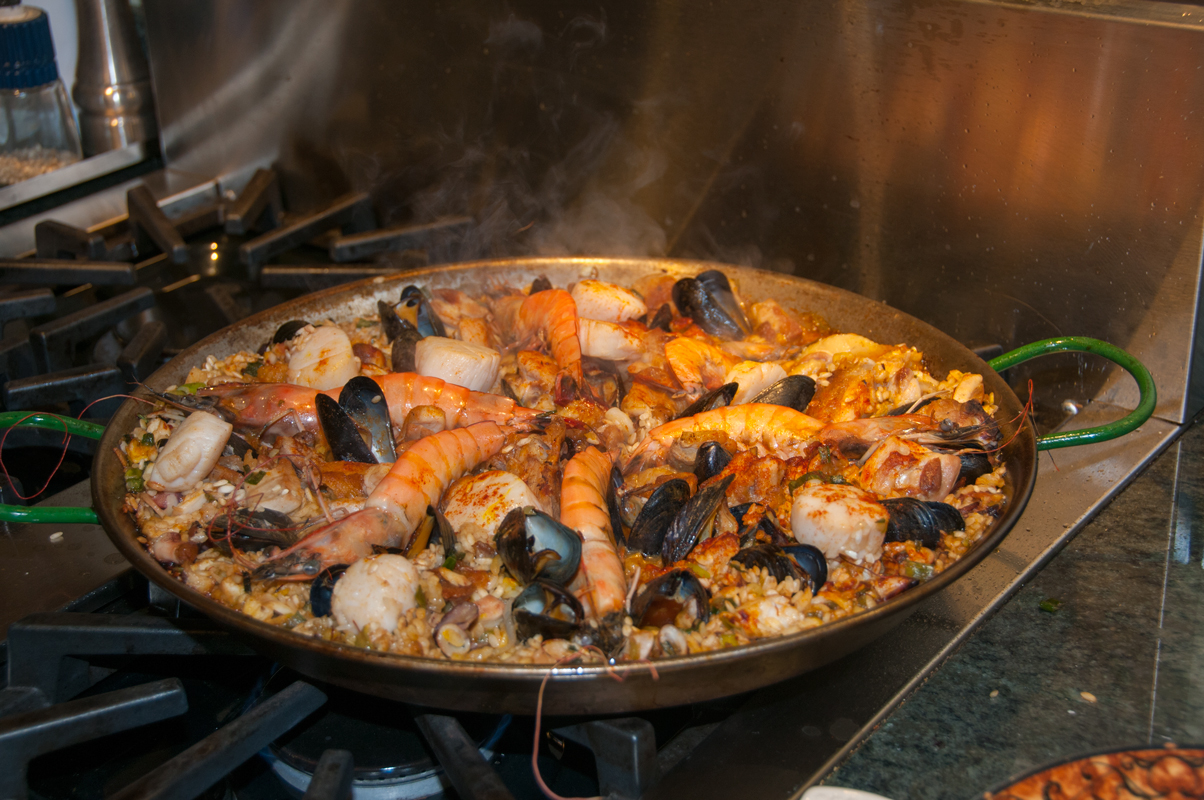
We had a good visit.   Dinner at his favorite restaurant one night with friends, three of whom were Apple employees that had in their possession the new iPhone 6 and iPhone 6+, even though this was before the official release date.   And the next night, a smaller group at Wil’s home where we created and consumed an awesome paella.

Hoover Dam — September 12, 2014

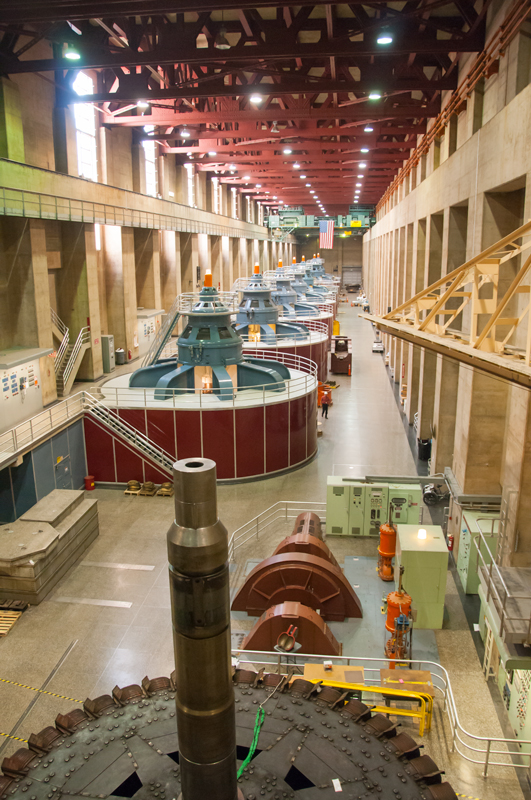
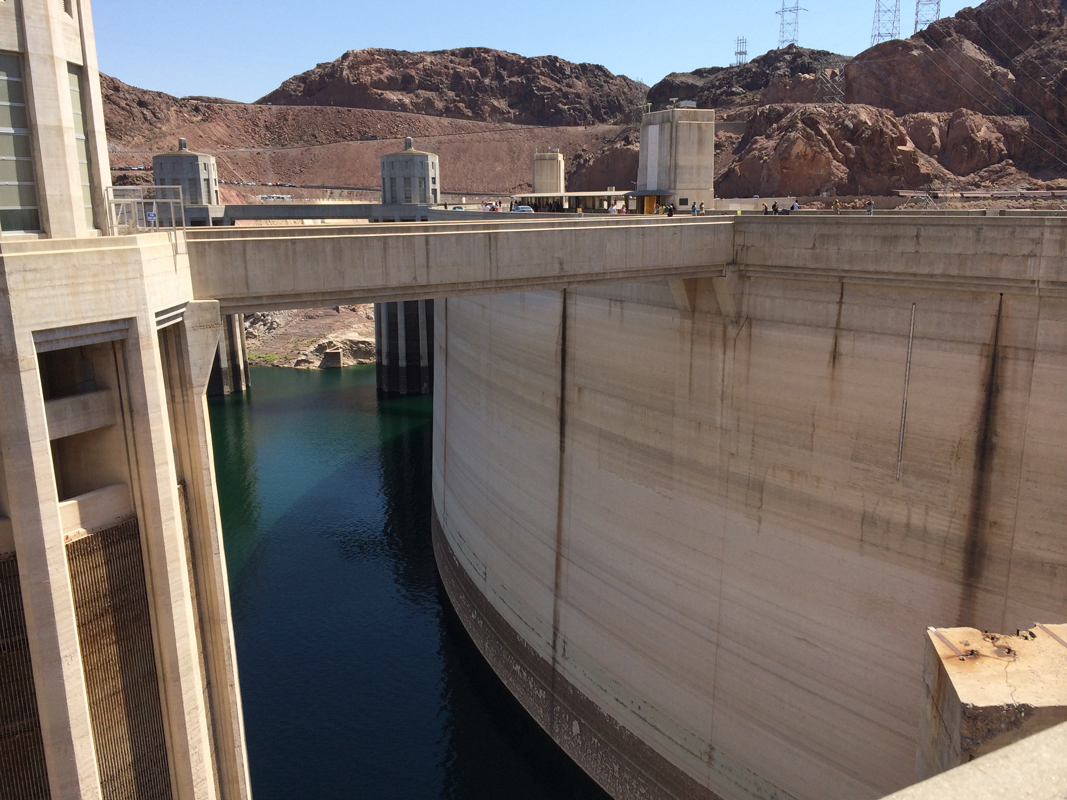
On our way to Las Vegas from the home of Bill & Colleen, we stopped at Hoover Dam.  There we signed up for a tour of the powerhouse and the interior of the dam.  Our guides were excellent, and we found the tour fascinating.  Most of what follows we were told, but in fact I have refreshed my memory by doing some research on the internet.

The design is a massive concrete arch-gravity dam. The monolithic dam is thick at the bottom and thin near the top, and presents a convex face towards the water above the dam. The curving arch of the dam transmits the water’s force into the abutments, in this case the rock walls of the canyon. The wedge-shaped dam is 660 ft thick at the bottom, narrowing to 45 ft at the top, leaving room for a highway connecting Nevada and Arizona, a highway that was supplanted in 2010 by the four-lane Hoover Dam Bypass due to security concerns following 9/11. The Dam rises 726 feet and is 1200 feet wide at its crest, and it took 91.8 billion cubic feet of concrete to create and weighs an estimated 6.6 million tons.

Hoover Dam was the most expensive engineering project in U.S. history at the time of its construction between 1931 and 1935, costing $49 million. Adjusted for inflation, it would have cost nearly $700 million to build in 2010.   The  Dam has become a major tourist attraction; nearly a million people tour the dam each year.

The Dam impounds Lake Mead, the largest reservoir in the United States by volume, but currently at very low levels due to regional drought.

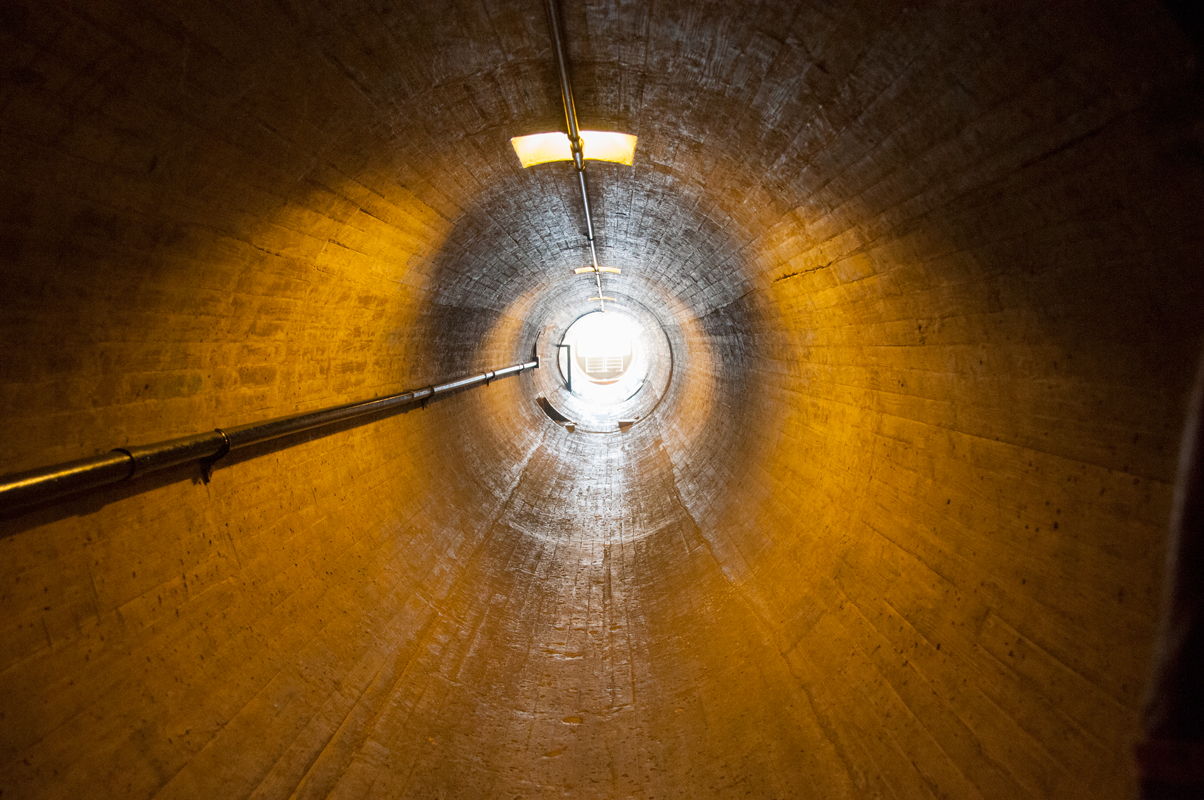
Before the dam could be built, the Colorado River needed to be diverted away from the construction site. To accomplish this, four diversion tunnels were driven through the canyon walls, two on the Nevada side and two on the Arizona side. These tunnels were 56 feet in diameter.

To protect the construction site from the Colorado River and to facilitate the river’s diversion, two cofferdams were constructed. Work on the upper cofferdam began in September 1932, even though the river had not yet been diverted. The cofferdams were designed to protect against the possibility of the river flooding a site at which two thousand men might be at work. Once the cofferdams were in place and the construction site was drained of water, excavation for the dam foundation began. For the dam to rest on solid rock, it was necessary to remove accumulated erosion soils and other loose materials in the riverbed until sound bedrock was reached. Work on the foundation excavations was completed in June 1933. During this excavation, approximately 1,500,000 cubic yards of material was removed. Since the dam was an arch-gravity type, the side-walls of the canyon would bear the force of the impounded lake. Therefore the side-walls were excavated too, to reach virgin rock as weathered rock might provide pathways for water seepage. The men who removed this rock were called “high scalers”. While suspended from the top of the canyon with ropes, high-scalers climbed down the canyon walls and removed the loose rock with jackhammers and dynamite.

The first concrete was poured into the dam on June 6, 1933, 18 months ahead of schedule. Since concrete heats and contracts as it cures, the potential for uneven cooling and contraction of the concrete posed a serious problem. Bureau of Reclamation engineers calculated that if the dam was built in a single continuous pour, the concrete would take 125 years to cool and the resulting stresses would cause the dam to crack and crumble. Instead, the ground where the dam was to rise was marked with rectangles, and concrete blocks in columns were poured, some as large as 50 feet square and 5 feet high. Each five-foot form contained a series of 1 inch steel pipes through which first cool river water, then ice-cold water from a refrigeration plant was run. Once an individual block had cured and had stopped contracting, the pipes were filled with grout. Grout was also used to fill the hairline spaces between columns, which were grooved to increase the strength of the joins.

More than 582 miles of cooling pipes were placed within the concrete. Overall, there is enough concrete in the dam to pave a two-lane highway from San Francisco to New York. Concrete cores were removed from the dam for testing in 1995; they showed that “Hoover Dam’s concrete has continued to slowly gain strength” and the dam is composed of a “durable concrete having a compressive strength exceeding the range typically found in normal mass concrete”.

There were 112 deaths associated with the construction of the dam. The first was J. G. Tierney, a surveyor who drowned on December 20, 1922, while looking for an ideal spot for the dam. His son, Patrick W. Tierney, was the last man to die working on the dam, 13 years to the day later.

Chinese labor was forbidden by the construction contract, while the number of blacks employed never exceeded thirty, mostly lowest-pay-scale laborers in a segregated crew, who were issued separate water buckets. While on the tour we saw historic pictures of Navajo high scalars.

Denver artist Allen True was hired to handle the design and decoration of the walls and floors of the new dam. True’s design scheme incorporated motifs of the Navajo People and Pueblo tribes of the region. The images and colors are based on Native American visions of rain, lightning, water, clouds, and local animals — lizards, serpents, birds — and on the Southwestern landscape of stepped mesas.

Complementing True’s work, the Norwegian-born, naturalized American sculptor Oskar J.W. Hansen designed many of the sculptures on and around the dam. Hansen’s bas-relief on the Nevada elevator tower depicts the benefits of the dam: flood control, navigation, irrigation, water storage, and power. (See my photo, below.)

Before water from Lake Mead reaches the turbines, it enters the intake towers and enters four gradually narrowing penstocks which funnel the water down towards the powerhouse. The intakes provide a maximum hydraulic head (water pressure) of 590 ft as the water reaches a speed of about 85 mph. The entire flow of the Colorado River passes through the turbines.

Power generation has allowed the dam project to be self-sustaining: proceeds from the sale of power repaid the 50-year construction loan, and those revenues also finance the multi-million dollar yearly maintenance budget. Power is generated in step with and only with the release of water in response to downstream water demands. Lake Mead and downstream releases from the dam provide water for both municipal and irrigation uses. Water released from the Hoover Dam eventually reaches the All-American Canal for the irrigation of over 1,000,000 acres of land. Water from the lake serves 8 million people in Arizona, Nevada and California.

Visit to Bill/Colleen, Part 2 — Grand Canyon, September 6-9, 2014
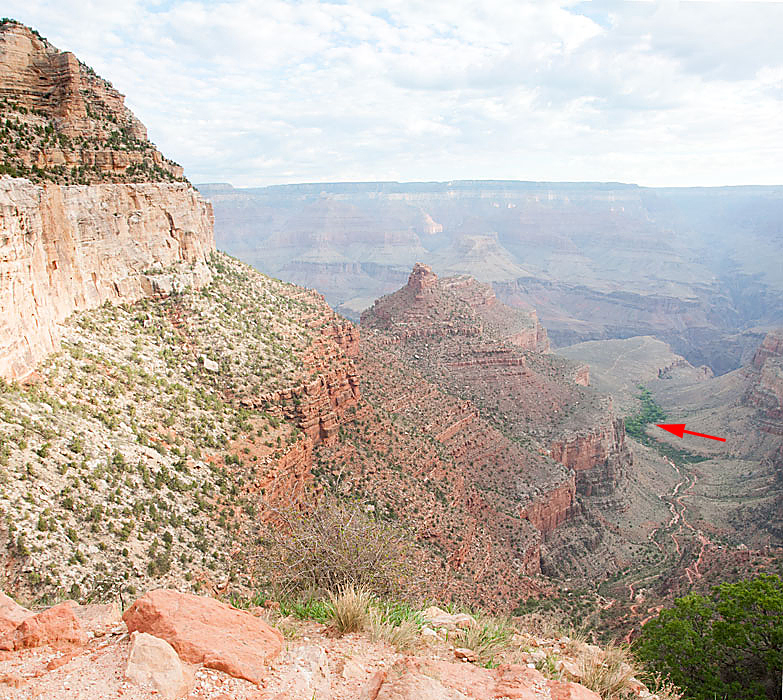
We had a thoroughly enjoyable time during our visit with Bill & Colleen.  All of it.  But the highlight of the visit has to be our multi-day camping trip to the southern rim of Grand Canyon.  Bill & Colleen own a perfectly comfortable and commodious fifth wheel camper, but as luck would have it, Bill’s boss had graciously offered Bill the use of his ginormous ShowHauler camper as a reward for Bill having found and fixed a number of problems with the beast.  Bill accepted, but delayed cashing in on the offer until we could arrive and share the bounty with him.  Have I mentioned that the ShowHauler is HUGE?  When we pulled into the parking lot of the IMAX theatre, we were immediately surrounded by at least 20 tourists who simply HAD to get a picture!

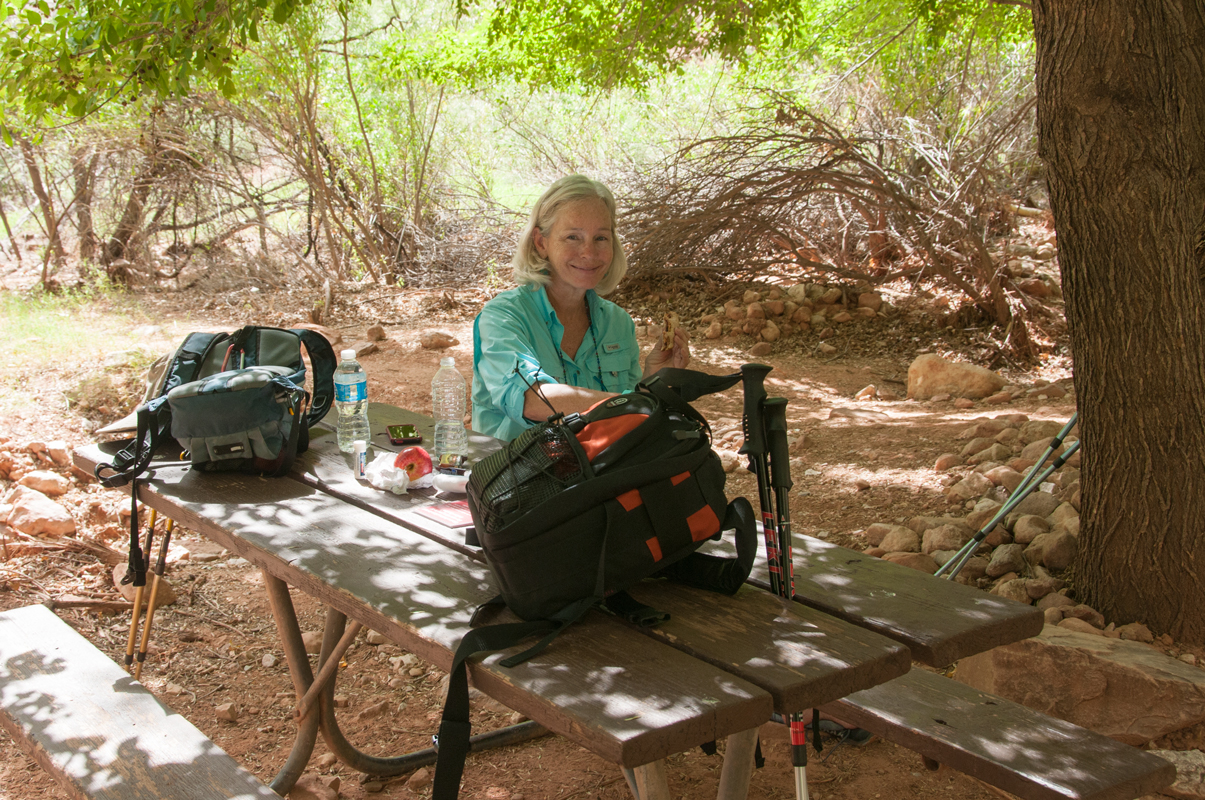
Bill is an active and accomplished hiker who has many many times walked all the way down one side of the canyon and up the other, spent the night, and then repeated the hike in reverse order the next day.  But knowing the physical limitations of Barb and me (especially), he wisely suggested that we descend only about half way and then return to our starting point.  Normally, Colleen would be perfectly capable of such a feat, but since she was suffering from a severe cold and/or allergy attack, she elected to remain in the camper while we indulged in an awesome “stroll”.

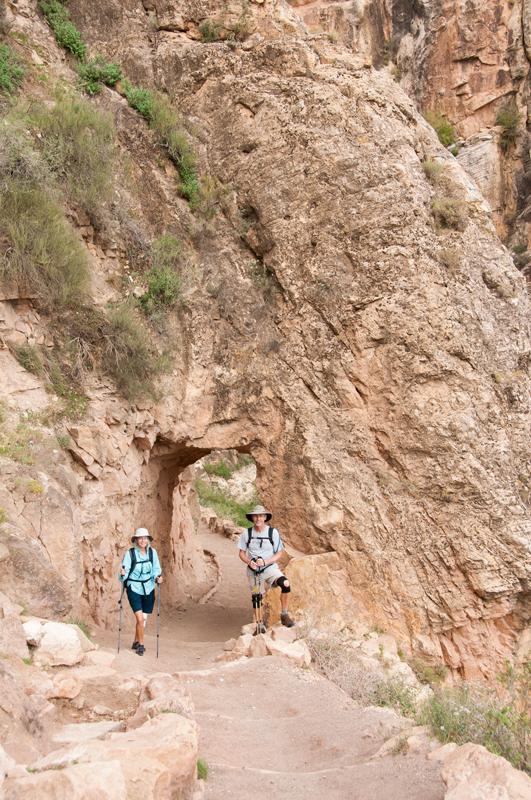
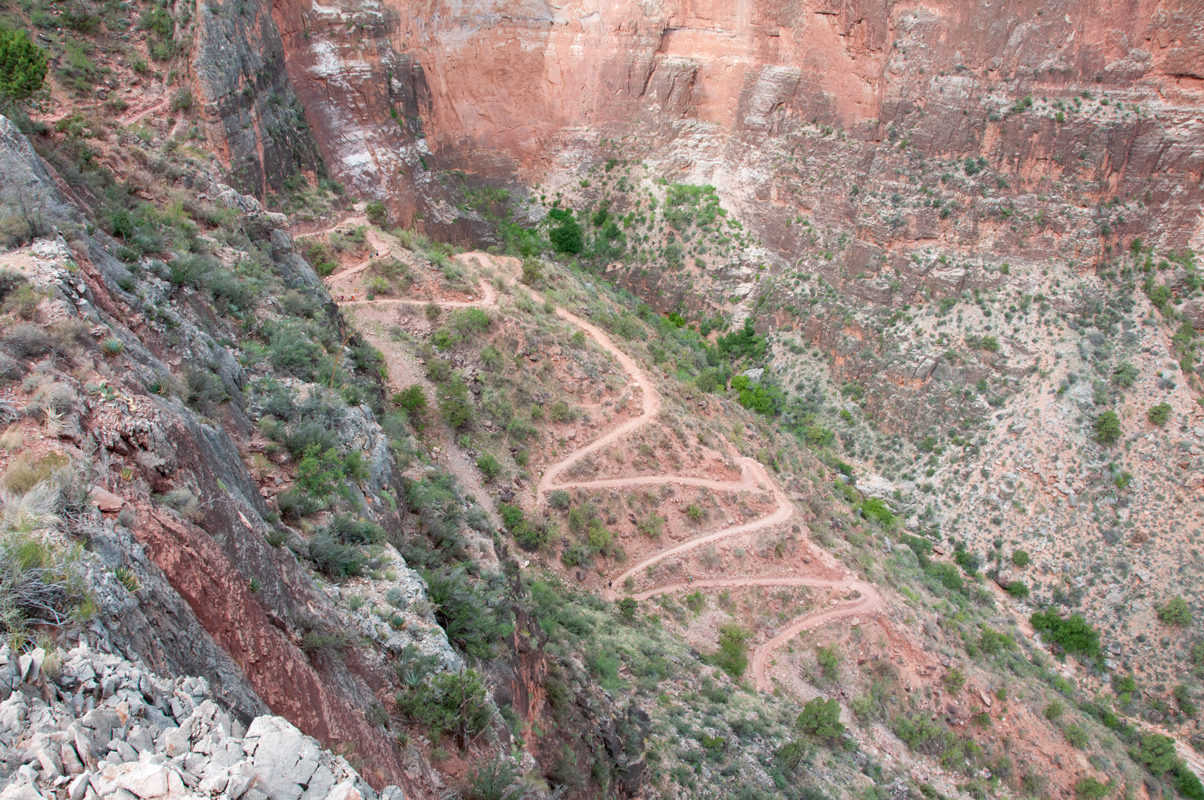
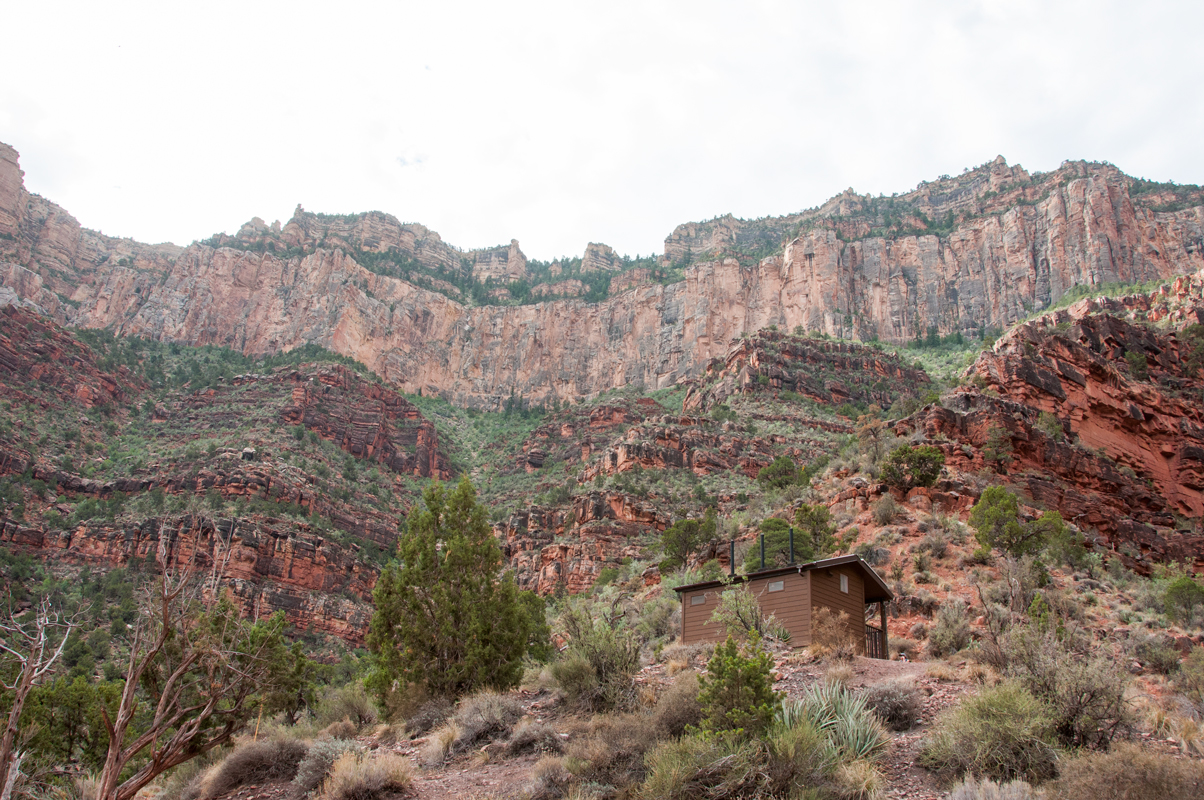
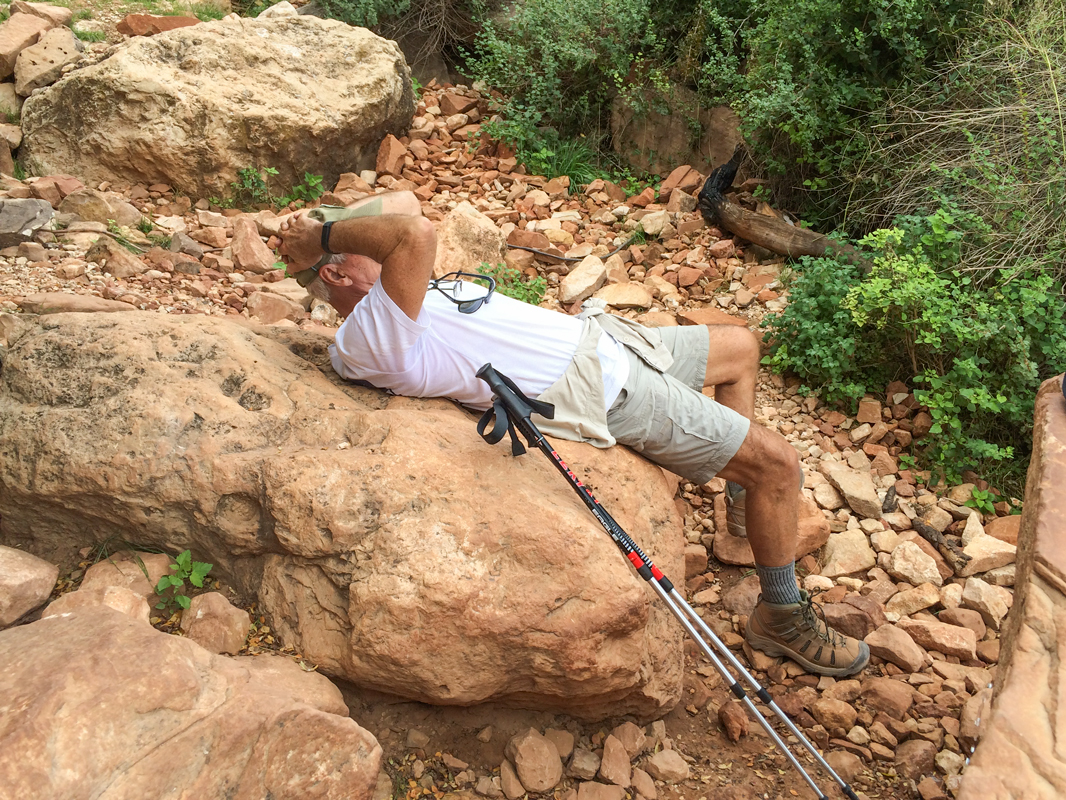
Bill suggested that we take the Bright Angel Trail down about 4 ½ miles to the Indian Garden site, some 3,040 feet below the rim, where a spring has created a surprising and remarkable oasis.  The trail is sometimes steep and sometimes not so much, sometimes wide and sometimes not so much, but always navigable by the pack of mules that carry the tourists less ambitious and/or fit than ourselves.  Barb wears a fitbit and runs a “Map my Track” app on her iPhone.  Interestingly enough, they reported that we went almost 11 miles rather than the expected 9.  We took only a minimum amount of water with us, knowing that we could replenish our supply at each of the rest station cabins that came every 1 ½ miles.  (On our way back up, we rested a good bit more often than every rest station.)

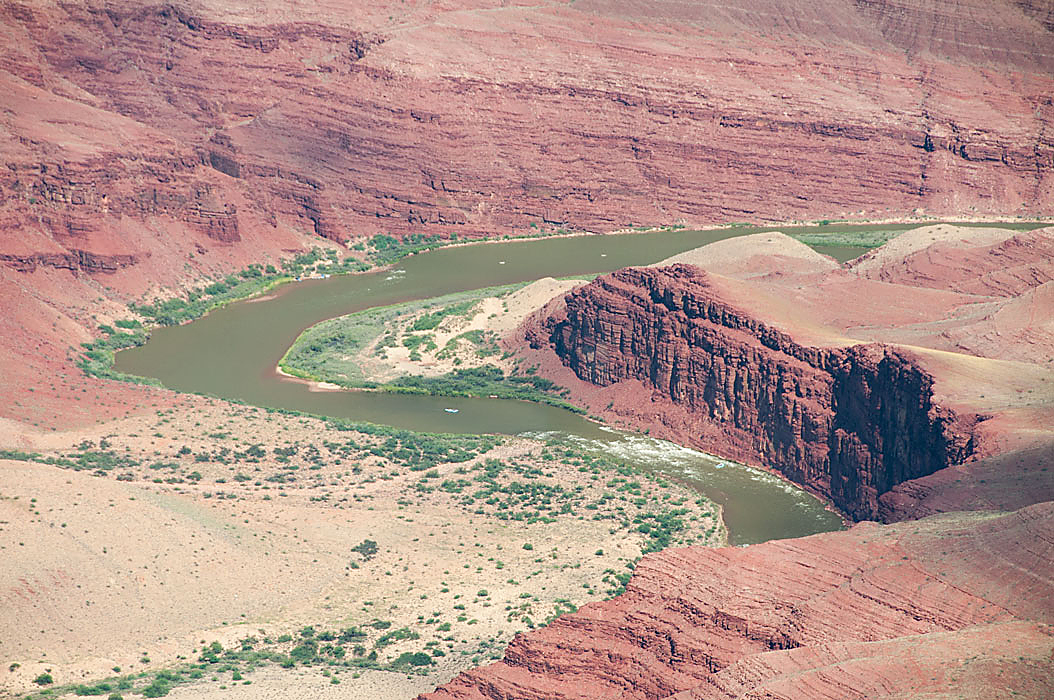
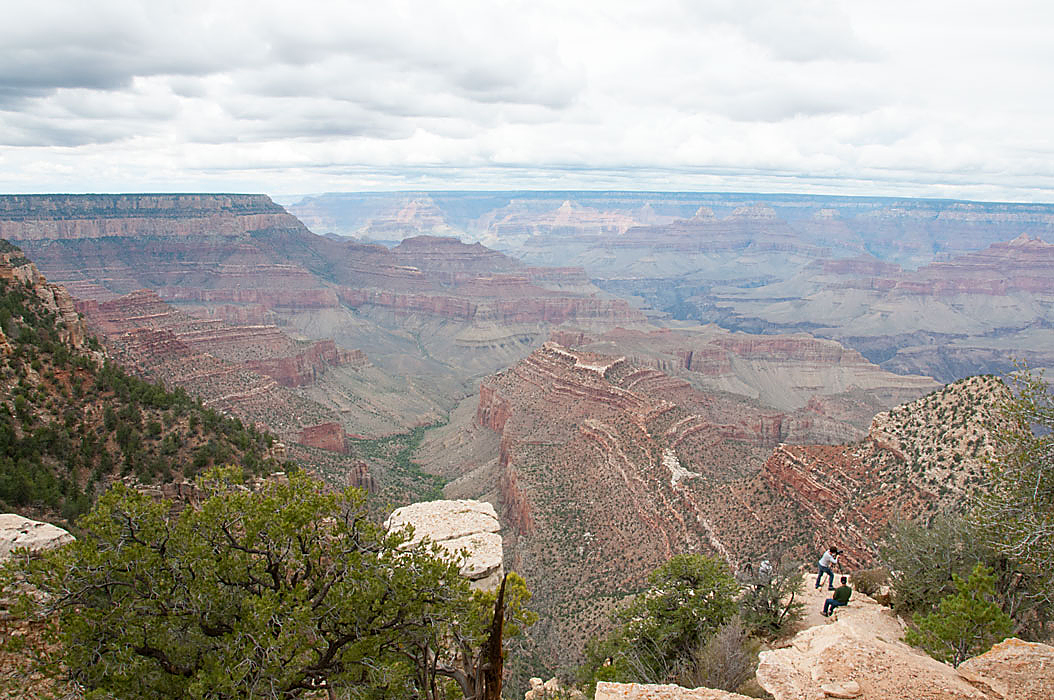
It goes without saying that the Canyon is visually awe inspiring, but we were also impressed by the infrastructure provided by the National Park Service.  Free shuttle buses, informative displays, interesting Park Ranger programs and well-equiped and maintained campgrounds.  Everything first class.

On two days subsequent to the hike, we visited by car and by foot some of the other vistas along the southern rim, ending our visit at the Desert View Watchtower, a 70-foot-high stone building more than 20 miles to the east of the main developed area at Grand Canyon Village. The four-story structure, completed in 1932, was designed by American architect Mary Colter. The tower was designed to resemble an Ancient Pueblo Peoples watchtower. The base was intentionally designed to convey a partly ruinous appearance, perhaps of an older structure on which the watchtower was later built. The base is arranged within a large circle with the tower to the north. Tiny windows are irregularly arranged, some of which are themselves irregular in shape. The main space is the Kiva Room in the base structure. (Faithful readers will recognize the significance of “Kiva Room” from our earlier posting about Mesa Verde.)

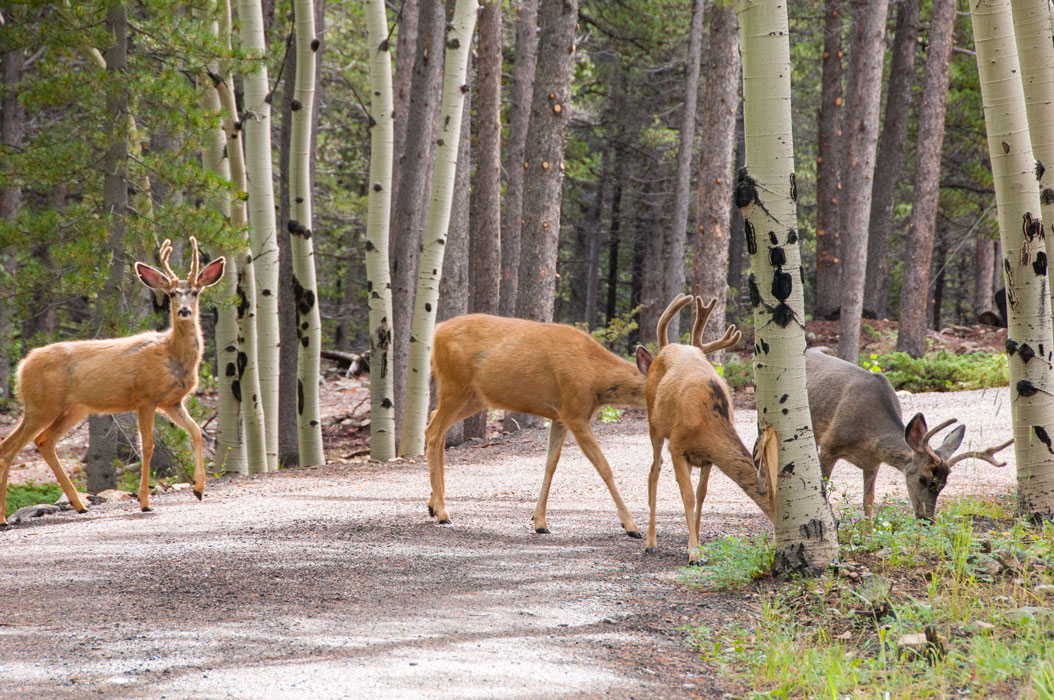
One other thing deserves mention about our Canyon experience:  the repeated presence of elk in the campground, grazing with perfect aplomb and indifference to the tourists frantically taking photographs from only a few yards away.

All in all, the camping trip to the Canyon was a fantastic experience for which we owe an enormous amount of gratitude to Bill and Colleen.

Visit to Bill/Colleen, Part 1 — Arizona; September 4-11, 2014

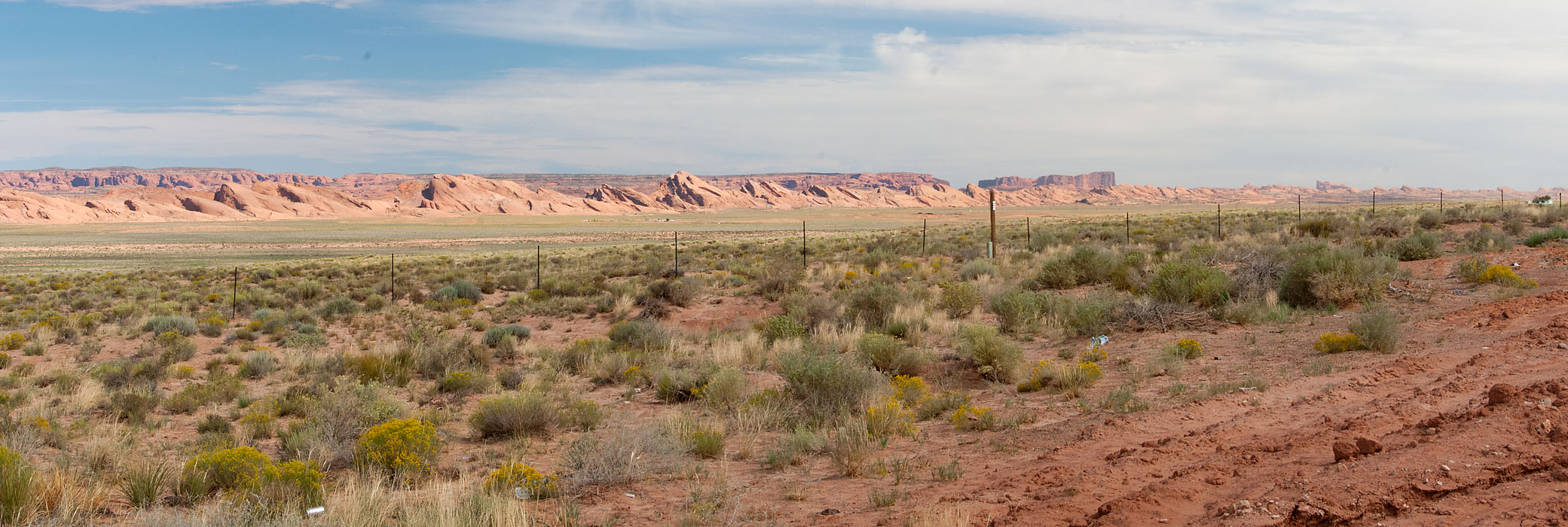
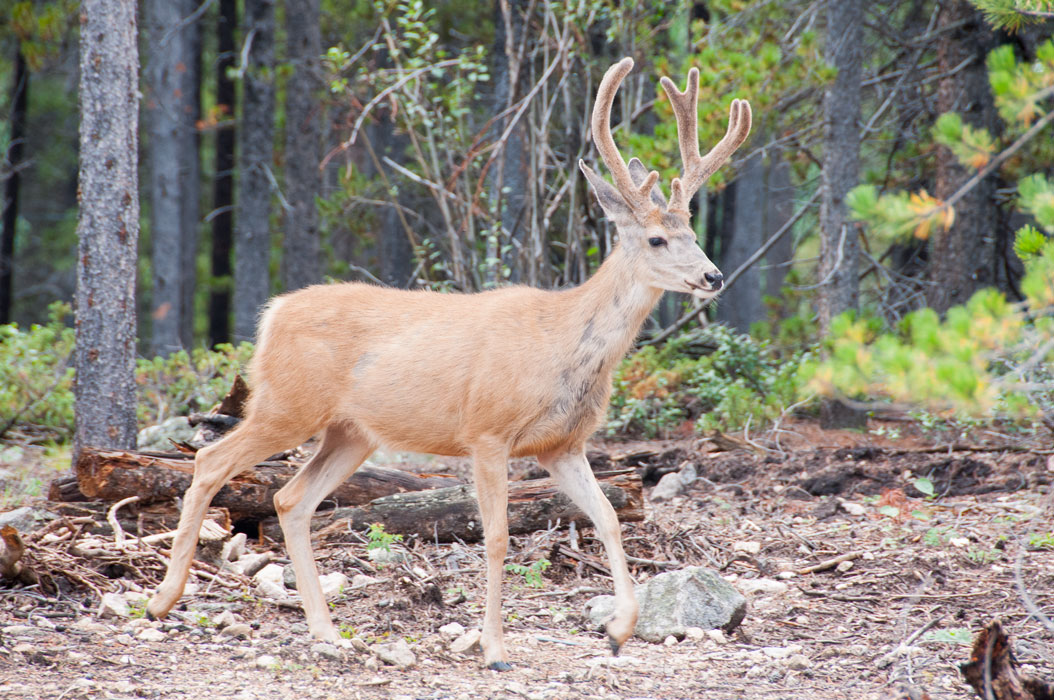
Our trip into the Southwest has been filled with interesting sights and experiences.  As we left our Mesa Verde campsite on September 4, Barb grabbed a shot of two young fawns and their mother.  As we made our way toward the home of Bill & Colleen (Dolce Vita), we passed through increasingly dry and dramatic landscapes.  We anticipated stopping at the exact spot of Four Corners and spread-eagling onto four states at once.  Alas, the spot is not public property and we left disappointed.  Bill & Colleen were terrific hosts, and we had a great time — so much so that I have decided to break up my coverage into two parts, with this part being the bookends that enclose our hike into Grand Canyon, covered in the next part.

Early in the visit Bill took Barb & I to a nearby box canyon where Amerindians used to corner game for hunting, and where they left rather extensive petroglyphs.  After our multi-day visit to Grand Canyon we had a day of rest while Barb recovered from a cold and/or an attack of allergies, and we then went on a day trip that included a visit to beautiful Sedona, quirky Jerome, and the bustling city of Prescott, site of the recent tragic deaths of firefighters but more to the point, the location of the beautiful piece of land upon which Bill & Colleen will eventually build.  We also took advantage of Bill’s remarkable ability to help others; he accompanied us on a preliminary visit to a dealer of campers and he master-minded the repair of a zipper on the tent Barb & I have been using for our car-camping adventures.

Bill & Colleen’s home is super-nice and in a great setting.   In the evenings we sometimes heard coyotes yipping in the distance, and on our last night we heard bull elk bugling and cow elk mewing. Neat!

Mesa Verde National Park — Colorado; September 2-3, 2014

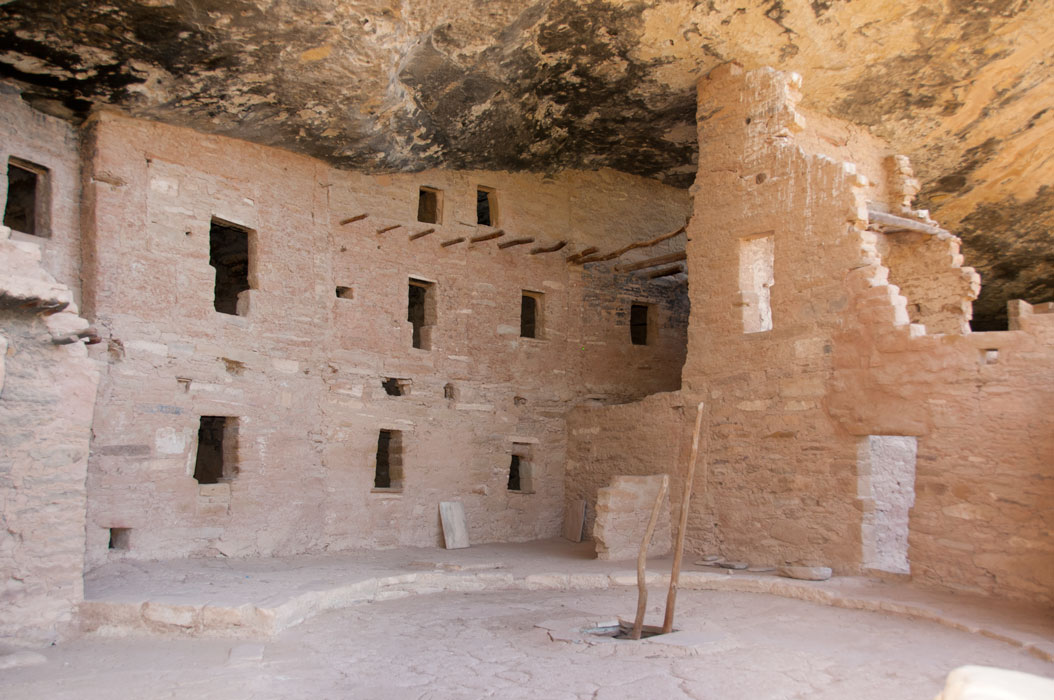
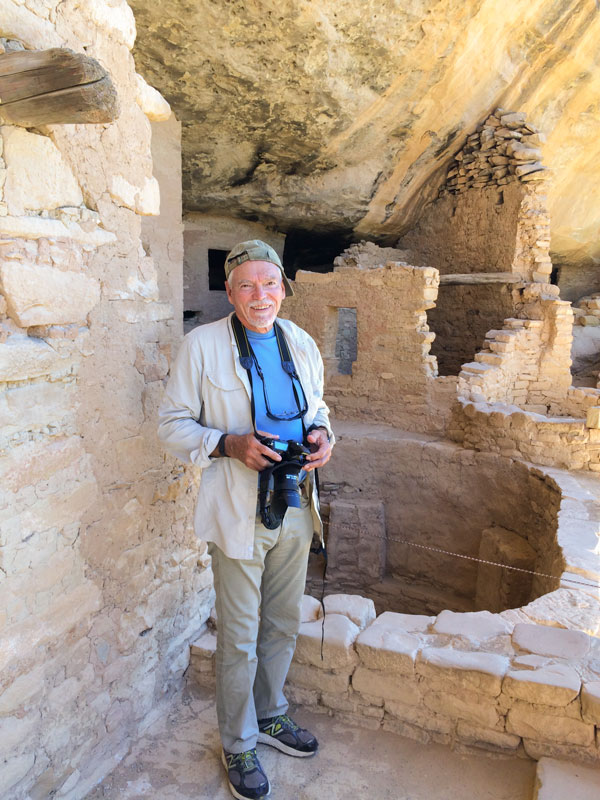
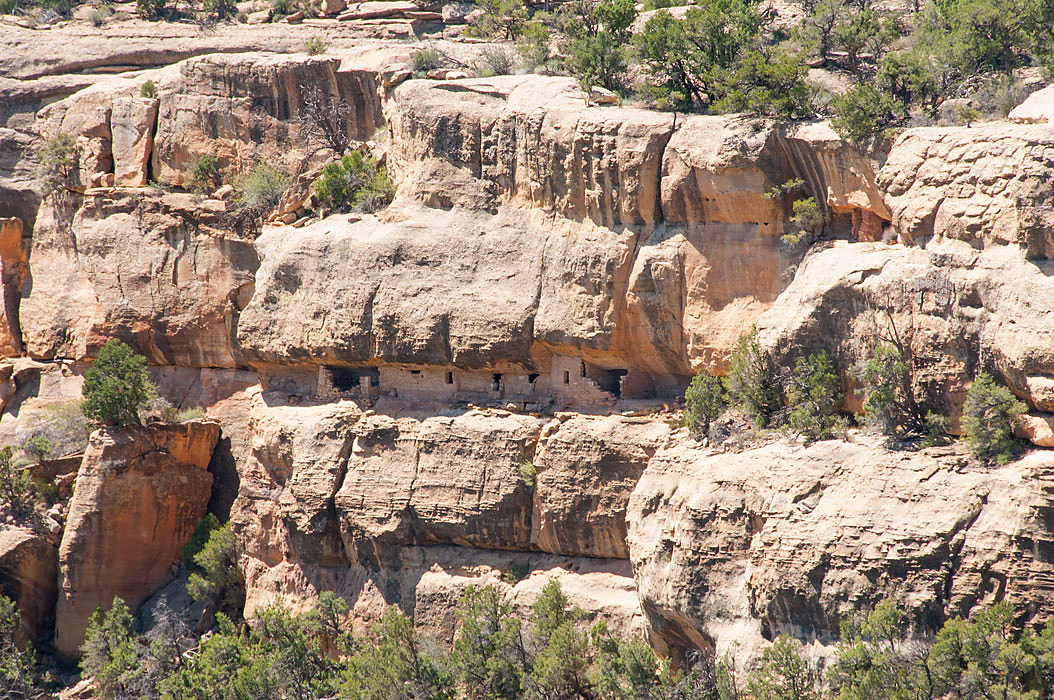
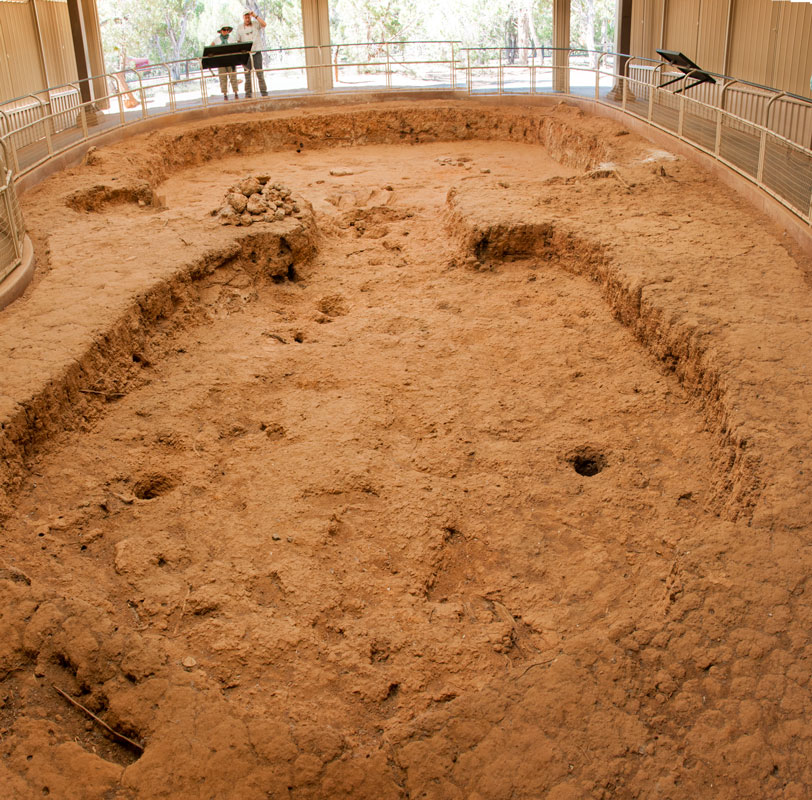
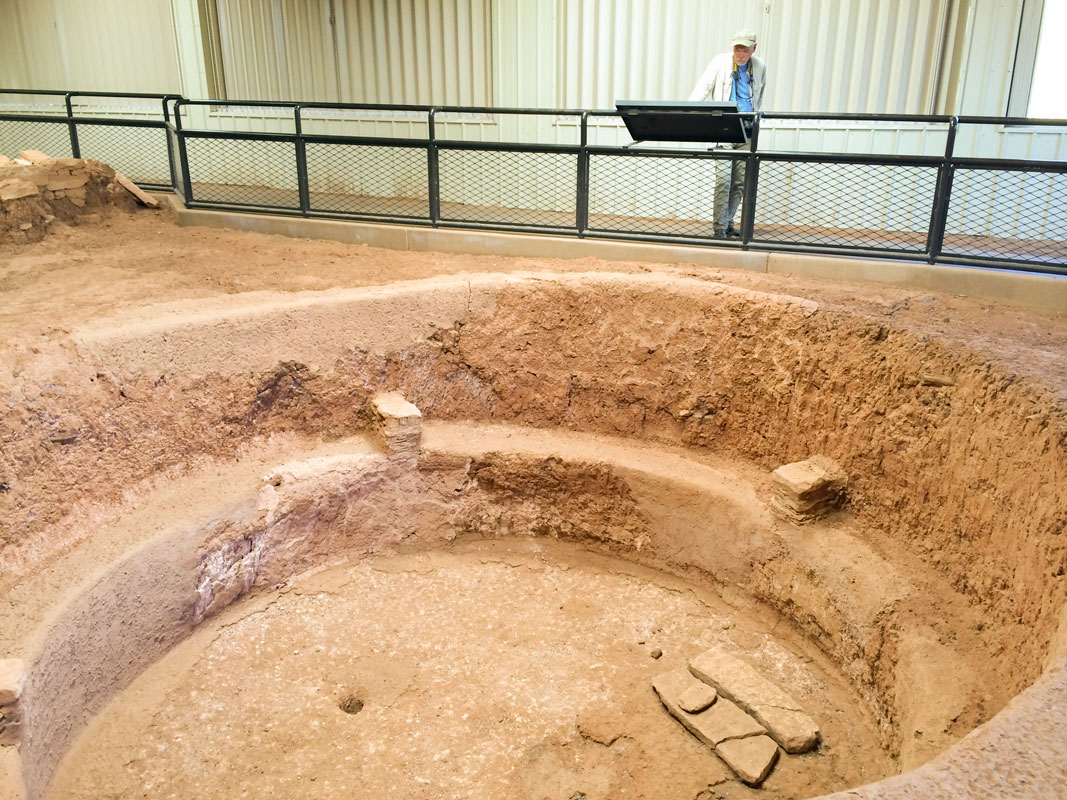
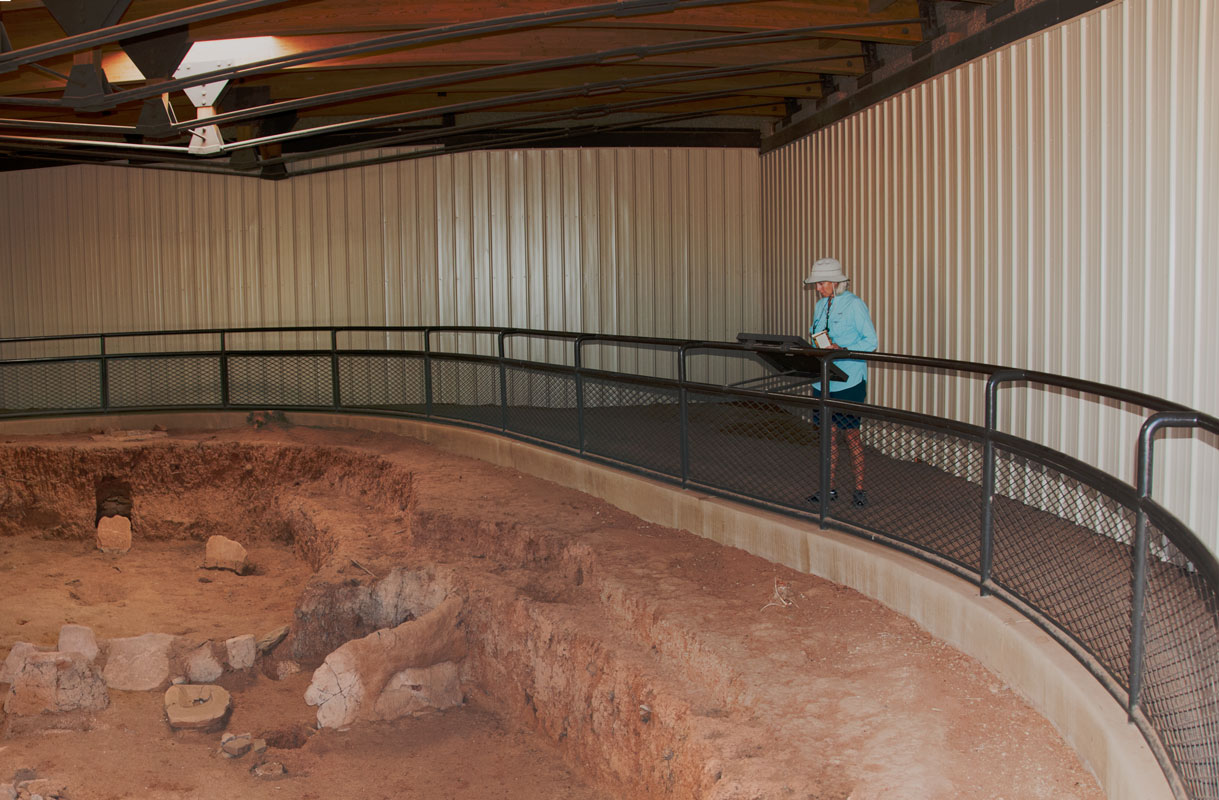
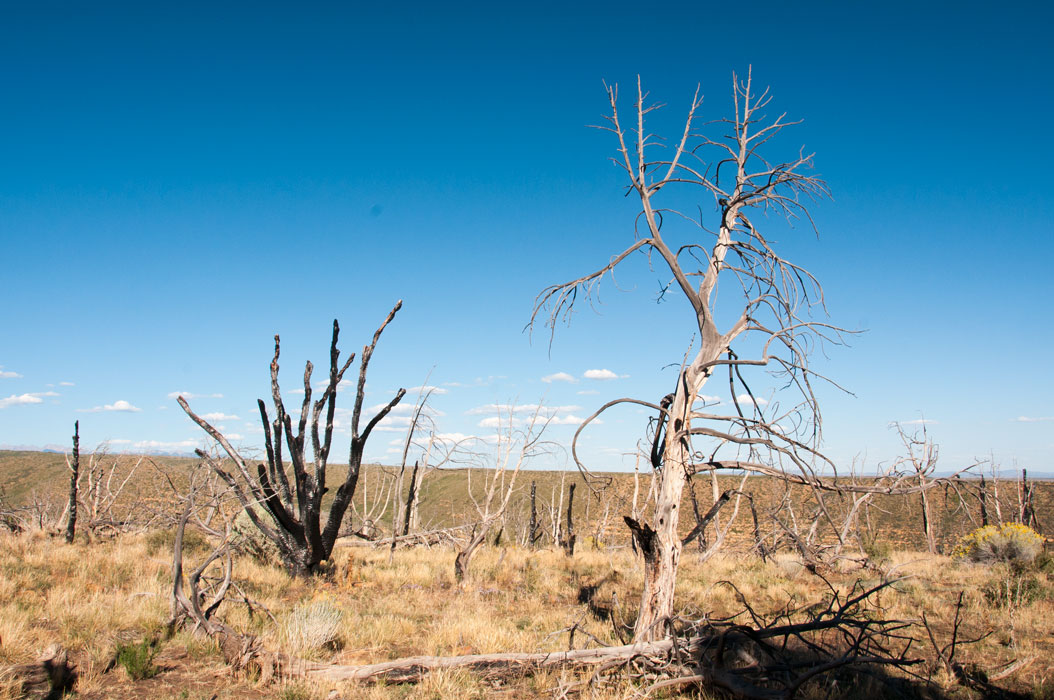
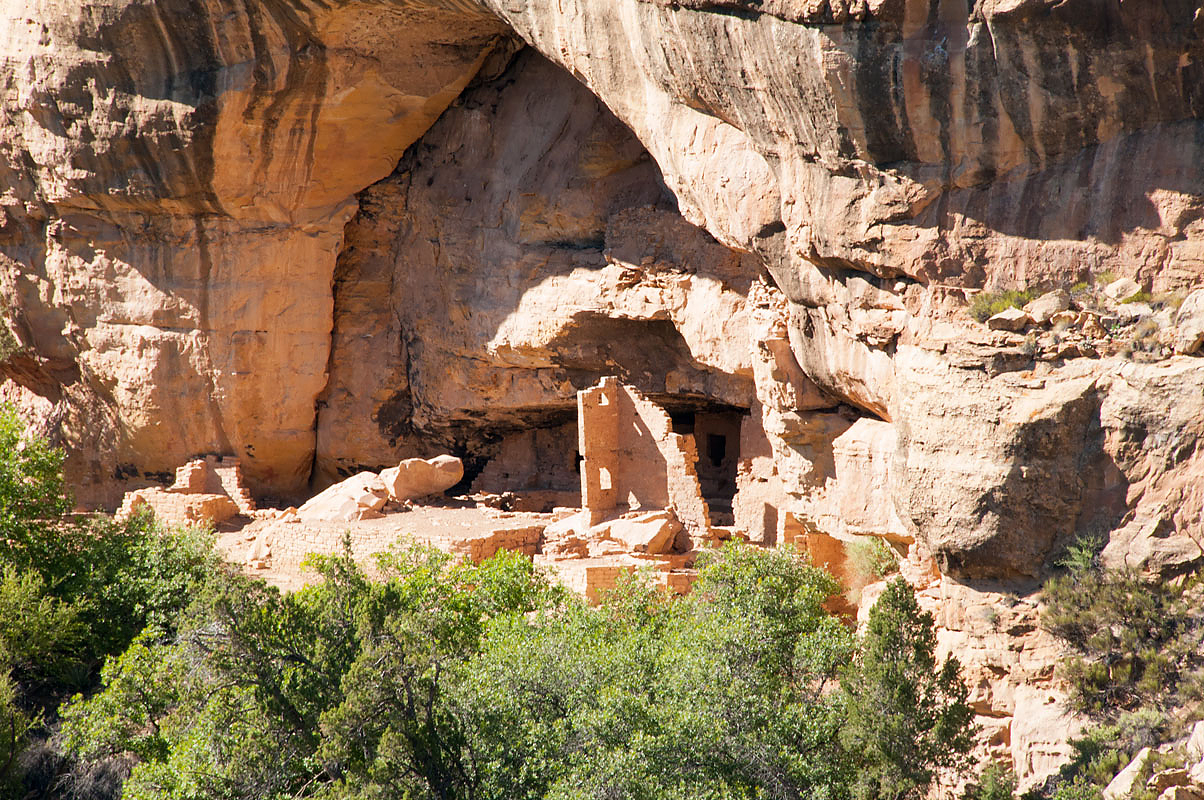
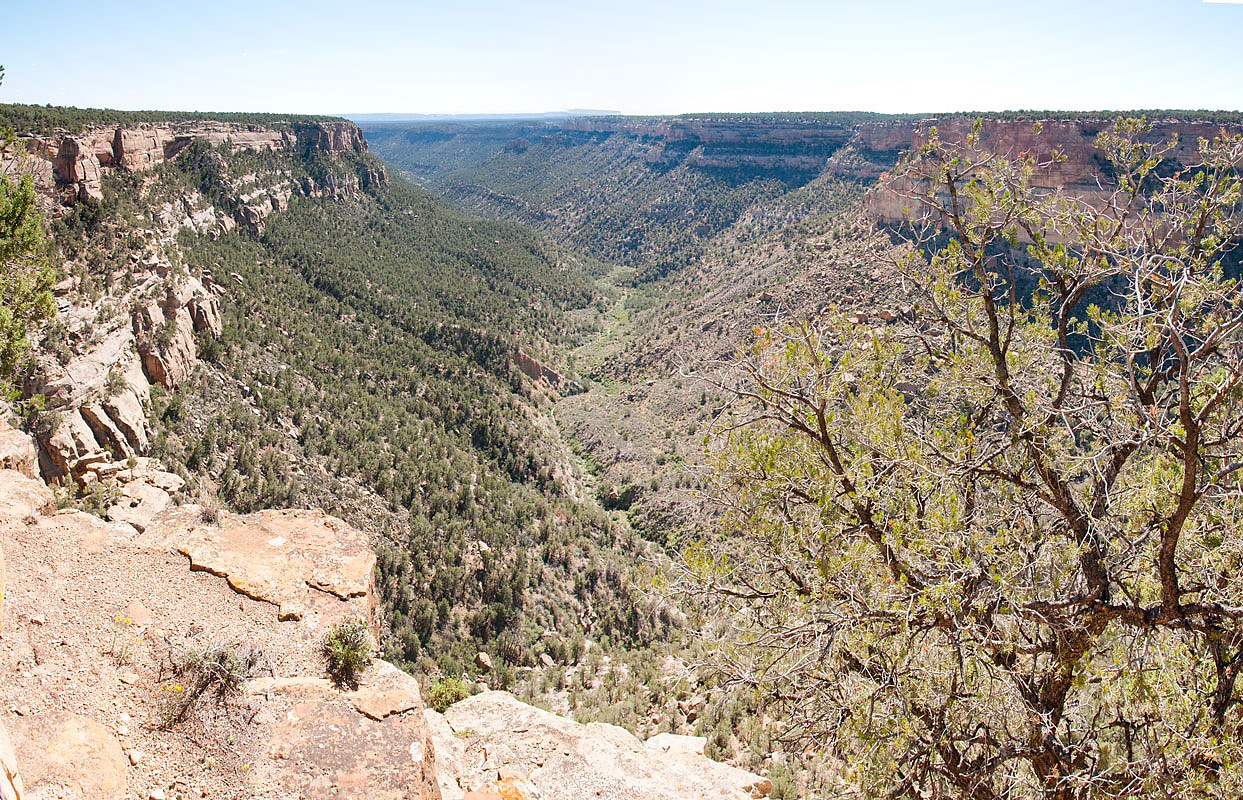
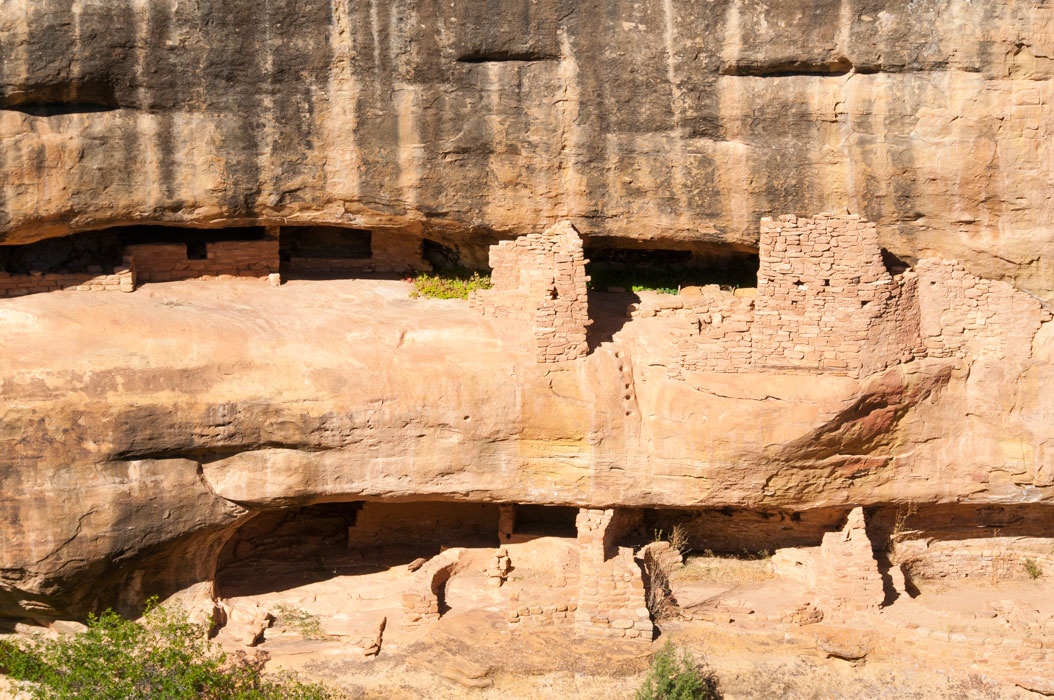
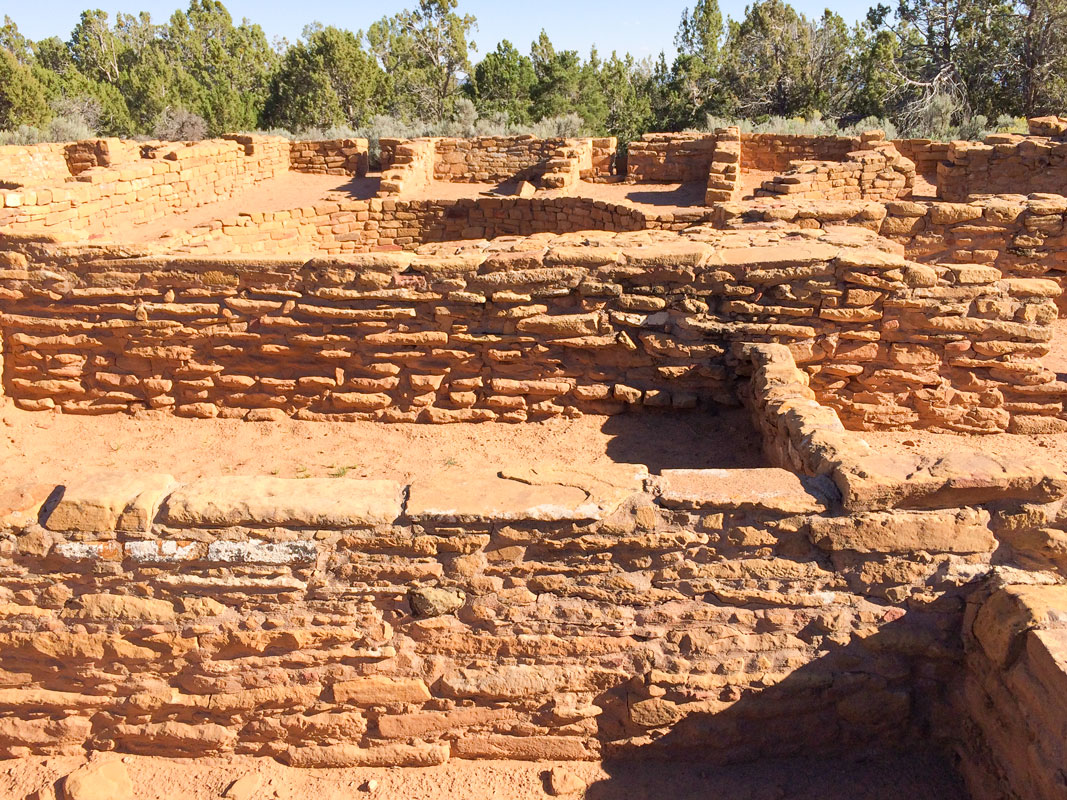
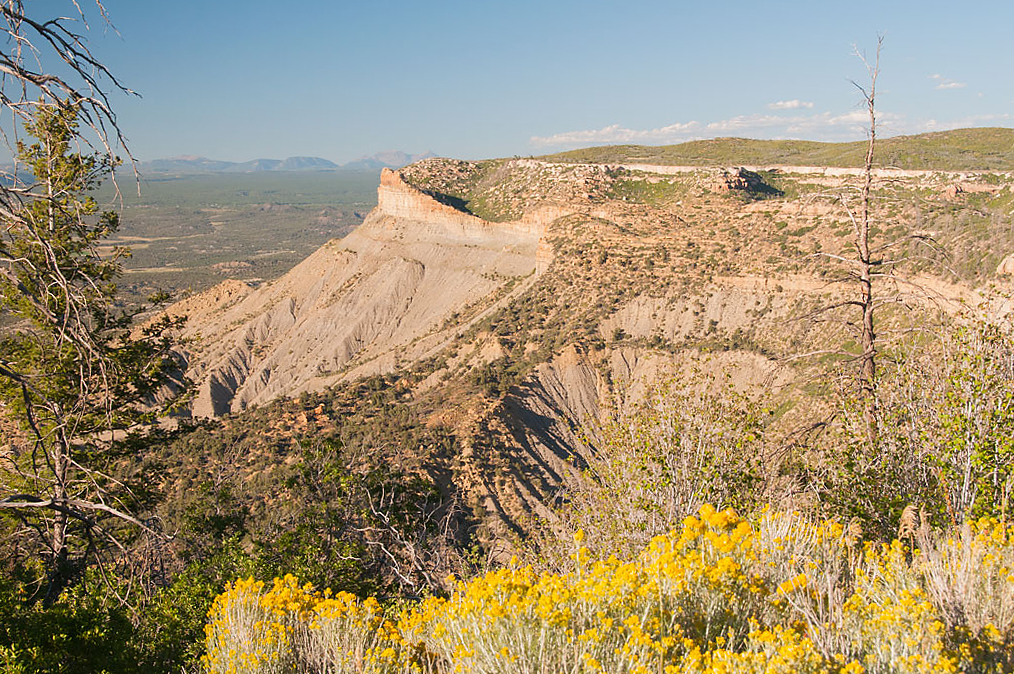
Barb and I spent a fascinating day exploring the ruins in the Mesa Verde National Park in Colorado.  We arrived at the campground the night before and got oriented at the Visitor Center.  We learned that some 4500 archeological sites have been discovered, of which about 600 are the iconic cliff dwellings.  “Mesa Verde” means “green table” in Spanish.  The name derives from the vegetation that thrives on the top of the plateau or mesa of the region.  Actually, the words should be plural, since the original prehistoric solid mesa was already carved into a large number of mesas separated by deep canyons by the time the ancestors of the current native peoples settled there about AD 550.  Archeological research has revealed much about the ancestors, originally called Anasazi – a Navaho word roughly translated as “the ancient foreigners” – but now called Ancestral Pueblo people to reflect their modern descendants.  The archeological evidence reveals the gradual development of increasingly sophisticated lifestyles.  From the beginning they farmed corn, beans and squash on the mesa tops and hunted wild animals and built pit houses on mesas and in cliff alcoves. They gradually became prolific potters and advanced from using the atlatl to throw spears to using the bow and arrow.  By about AD 750 they began building houses above ground with upright walls fashioned from poles and mud, often with a pit house or two in front.  Later the pit houses evolved into kivas.  Kiva is a Hopi word and refers to round chambers built in a fairly standardized fashion that features a separate ventilation shaft that opens into the kiva and delivers fresh air to a fire pit located centrally on the floor.  Between the shaft opening and the fire pit there was an air deflector that protected the fire and increased circulation and encouraged the smoke to rise up through the hole in the roof that was also used for access into the kiva by way of a ladder.  Another standard feature was the existence of a sipapu – a hole in the floor that related to the belief that people had entered the world through such a hole in the beginning.  In modern Pueblo communities the kiva is still an important ceremonial structure.

By AD 1000, architectural skills had advanced from pole-and-adobe construction to stone masonry.  Double-coursed walls of stone often rose two or three stories high and were joined as units of 50 or more.  Pottery evolved with better techniques and decoration.  Farming became more important and extensive on the mesa tops.  And then, in the late 1100’s, for unknown reasons, the population moved back into the cliff alcoves, which they accessed by chipping hand and toe steps that permitted movement between their homes and the fields in the mesas above.  But now the cliff dwelling were no longer pit houses, but were the masonry structures that endure until this day.

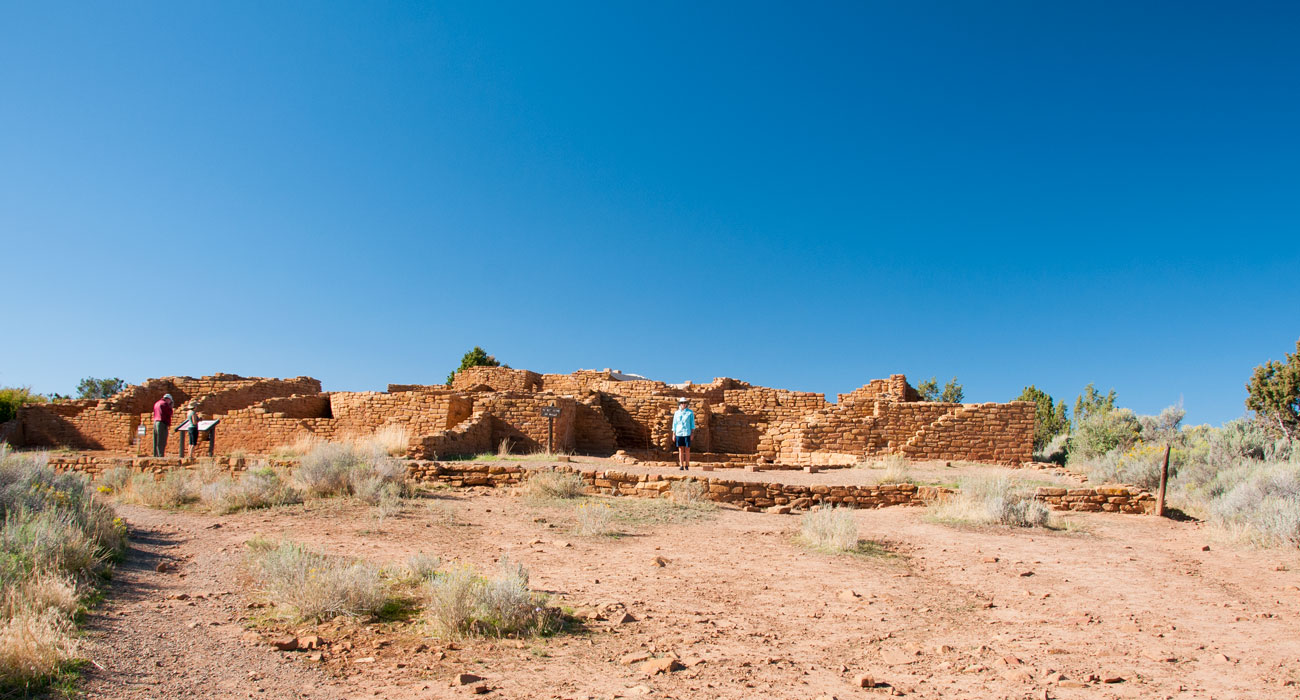
On our first full day of the visit, Barb and I joined a ranger-led tour of the “Cliff Palace” that required climbing four ladders.  We also visited “Spruce Tree House”, the best-preserved dwelling and one that permitted self-guiding.  There, we climbed down into a kiva whose roof had been restored.  We also took our car on the Mesa Top Loop Drive that took us to a number of early pit house sites and also to a number of canyon overlooks from which we could look across to other cliff dwellings.  Near the end of that loop was Sun Point View from which a dozen cliff dwellings are visible, as well as the mesa-top building called Sun Temple across the canyon.  A short ride later, we were at the intriguing Temple itself, a large D-shaped structure whose four-foot-thick walls feature stones onto almost all of which texture has been carefully pecked.  Neither household goods nor roof beams have been found, indicating that the structure of nearly 30 rooms was probably never finished.  Why was it abandoned?  Indeed, why were the cliff dwellings in the alcoves below also abandoned?  No one knows for sure.

After another night in the campground, we continued on our voyage south and west toward our friends Bill & Colleen (Dolce Vita), who live near Parks, Arizona.  But the account of that visit deserves its own blog entry. 


Bishop Castle — Wet Mountains, CO; August 29, 2014

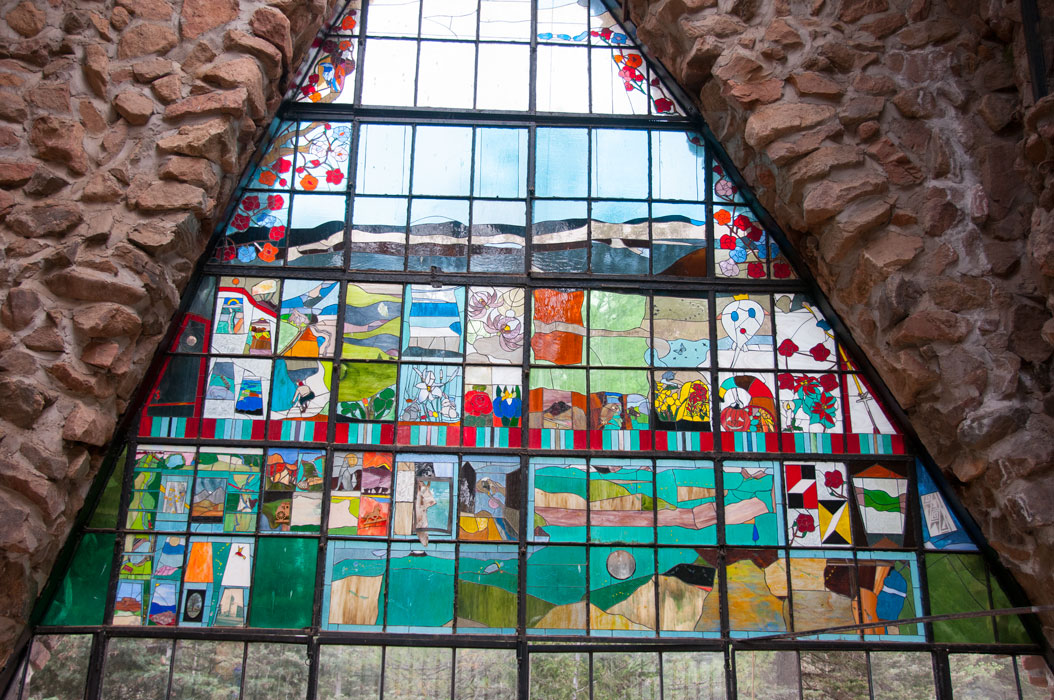
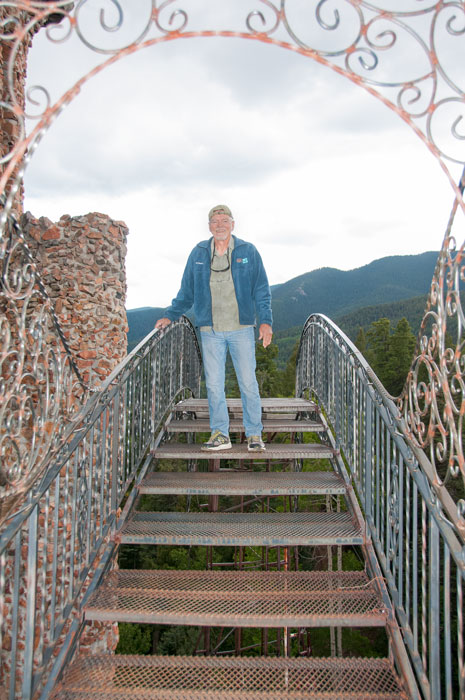
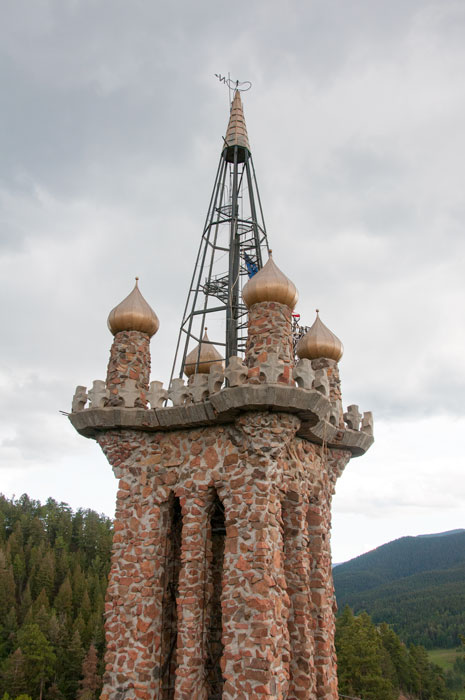
We had not been long at the mountain home of Barb’s sister Audrey when she suggested that we jump into the car and go see Bishop Castle.  We had no idea what we were going to see, and were totally amazed.  We climbed up into the Castle, reaching up so high that we were above the stone and instead onto a shaky peak constructed of steel rebar.  After a few quick photos we retreated to the lower rock portion of the tower.

Here is a description of Bishop Castle culled from several web sources:

Bishop Castle started as a family construction project and is named after its constructor, Jim Bishop.

The Castle is located in south central Colorado along a paved public road, State Highway 165, a part of the Frontier Pathways Scenic and Historic Byway, and Bishop Castle is shown on the official map.

Construction of the castle began in 1969, when Bishop began construction on a family cottage, which he decided to surround with rocks. Several neighbors noted that the structure looked something like a castle. Bishop took this into consideration and soon began building his castle. He had bought the land when he was fifteen for a price of $450. In 1996, he was challenged by the local and state government over unsanctioned road signs that pointed to the site. They settled the dispute by issuing official road signs.

For nearly 45 years, Jim Bishop has been building the castle on a mountainside in central Colorado. “Did it all myself, don’t want any help,” he says.

Every year since 1969, Bishop has single-handedly gathered and and worked at setting over 1000 tons of rock to create this stone and iron fortress in the middle of nowhere. It hasn’t been easy. For most of those 45 years Bishop was engaged in a running battle with Washington bureaucrats over the rocks that he used, which came from the San Isabel National Forest that surrounds the castle property. Bishop felt that they were his for the taking, the government wanted to charge him per truckload.

Another bone of contention that stuck in Bishop’s craw belonged to the Colorado state Chamber of Commerce, which refused to list Bishop Castle as an attraction in its official tourism guides.

Happily, those angry years are in the past. Both Uncle Sam and the Colorado Chamber now recognize that Bishop’s Castle is marketable, and that he’s transformed some heavy, unwanted rocks into pure tourism gold.

Bishop’s goal is to complete his castle before he dies. He has no thought of slowing down. Although the castle is mostly a hollow shell of cemented rocks and ornamental ironwork (Jim Bishop’s regular line of business), his future plans include completion of a moat and a drawbridge, a roller coaster mounted on the castle’s outer wall, and a balcony big enough to hold an orchestra. He also wanted to build a second castle for Phoebe, his wife, but she passed before he could even start on that one.

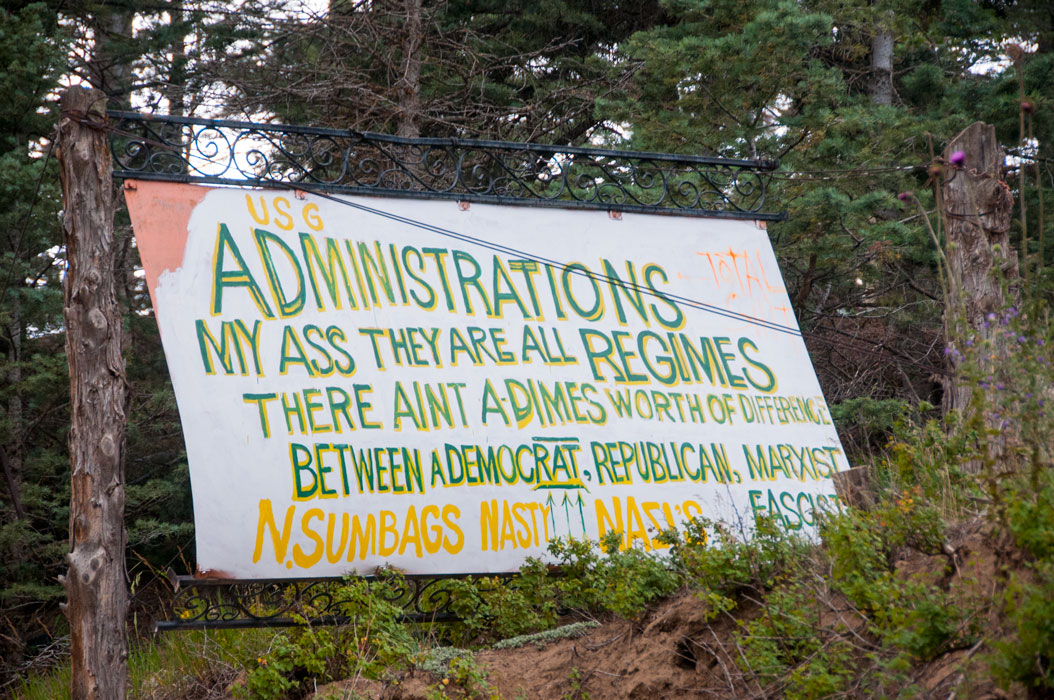
To a great extent, the construction of Bishop Castle has been fueled by creator Jim Bishop’s inveterate hatred of authority and his contempt for anyone willing to submit to that authority. He has spent years battling zoning, health, noise, and sales tax regulations in his ongoing quest to single-handedly expand and modify “the largest one-man construction project in the country, quite possibly the world,” all the while arguing that the government has “pulled a fast one on the american SHEEPLE” by chiseling away at our constitutional rights through a monolithic global conspiracy. Along the way, certain neighbors have accused Jim of being a satanic presence for allowing rave parties in the castle, and at one point several years ago, he and his son even had to overcome fifteen felony charges in court for dispersing a large group of unruly wedding party guests with a shotgun.

A visit to the Castle is always free and open to the public. Donations and purchases from a gift shop the Bishop family built on castle grounds have paid for construction of the castle and for a charity to give treatment for children in need.

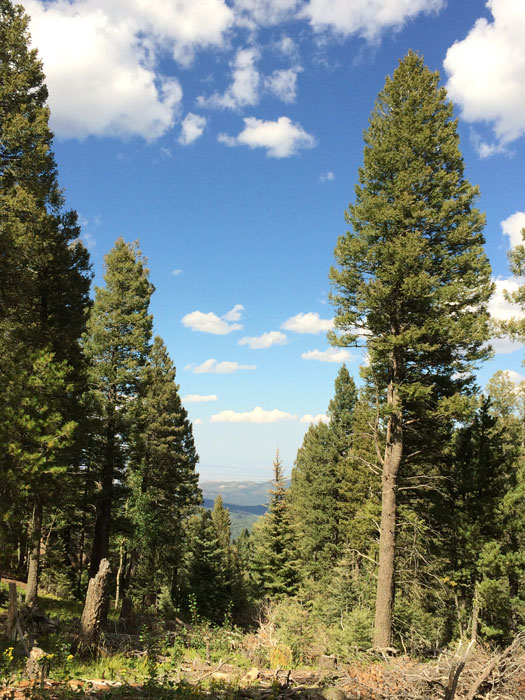
The drive to Bishop Castle is a steadily curving incline along Highway 165, a road just southwest of Pueblo, Colorado that leads through dense stands of Ponderosa pine, broad meadows, and sharp ledges that open below to sweeping vistas of uncultivated ranch land. After several miles of steep road surrounded by thickening forest, visitors finally reach their destination at 9,000 feet above sea level in the thin Colorado air. Dozens of cars line the road, and scores of people stroll toward a thick barricade of trees penetrated by a dirt trail that passes a moat and a bridge Jim has been working on for the last several years.

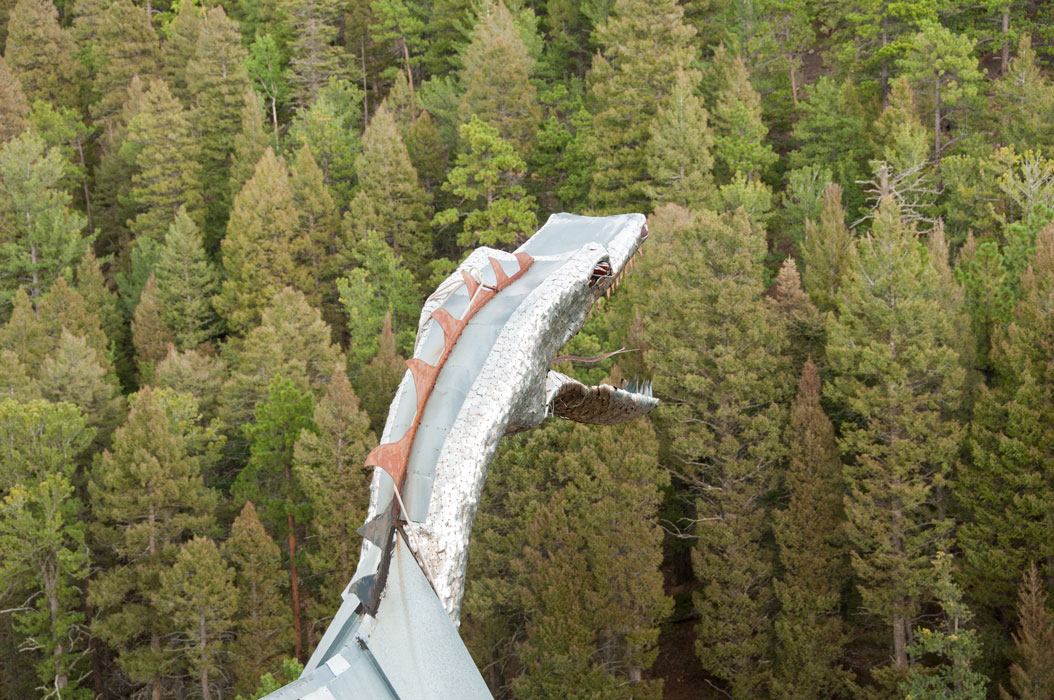
Just a few hundred feet farther up the trail sits Bishop Castle. Jutting above the trees, a dragon’s head of charred silver cranes over the castle’s face. The castle itself, a throwback to the Middle Ages and a testament to human endurance, sprawls in unapologetic splendor across a wide expanse of gradually sloping open ground. Every stone and every inch of mortar seem to have been hurled into a conflation of ordered chaos on a massive scale by a man who has never once used a blueprint or floor plan, only his sheer force of will and self-described “God-given genius.”

Flying buttresses on every side of the structure anchor three floors, lending the castle an appearance of stability and Old World elegance. On the southeast corner, a column of 42 outer steps dropping from the third floor to the ground juts out at 60 degrees.

If you are ever anywhere near this part of Colorado, be sure to stop and see this incredible construction.

Visit to Audrey’s — Beulah, CO; August 29 – September 2, 2014

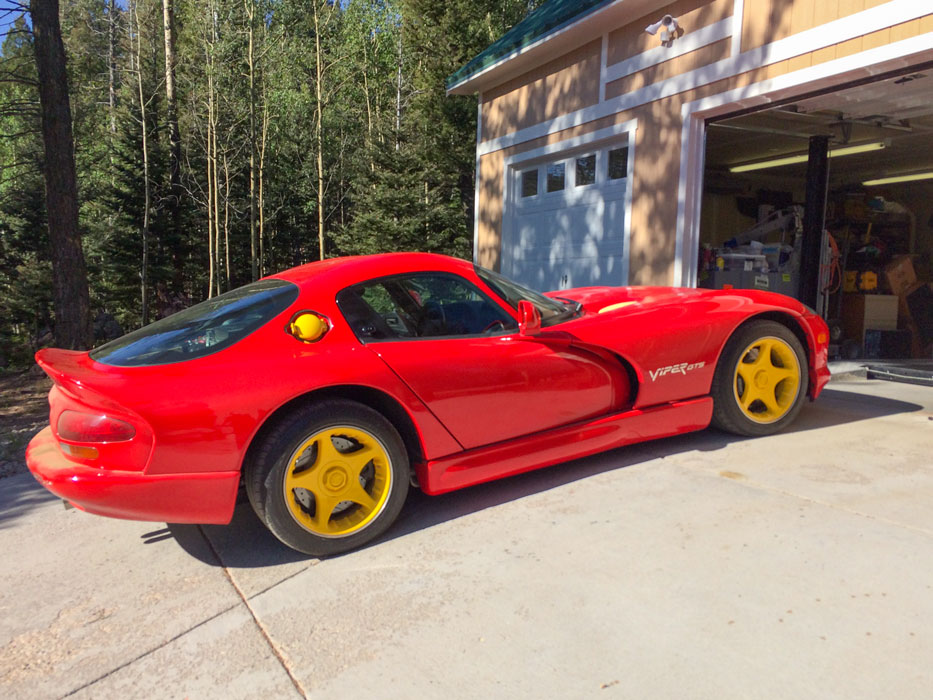
On August 29 we arrived at the mountain home of Barb’s sister Audrey and her husband Mike Englert.  We had a great time filled with catching up and local sightseeing, including dinner one night in the unincorporated town of Beulah, trips to Pueblo and Colorado City and Florence and the Great Sand Dunes, walks on Englert’s property and around a nearby lake, and a quick visit to the amazing Bishop Castle, a place so unique and surprising that I will save its description for the next blog entry.  Audrey & Mike live in a delightful multilevel A-frame dwelling with a wrought iron staircase.  We stayed in the guest room they have added above their commodious garage that houses, among other things, Mike’s Viper automobile.  We had a lovely time during our visit, with the bonus of getting to see one of Audrey’s daughters, Michelle, and her boyfriend Tim,  on our last evening.

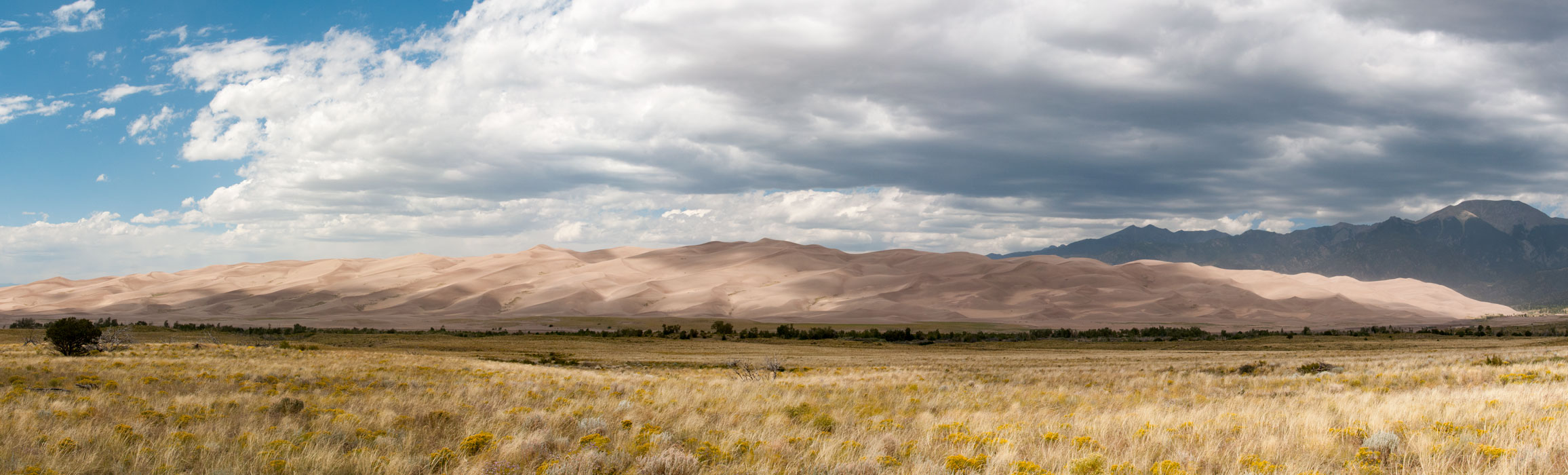
The Great Sand Dunes merit a few more words, adapted from the Wikipedia description:

The park contains the tallest sand dunes in North America, rising about 750 feet from the floor of the San Luis Valley on the western base of the Sangre de Cristo Range, covering about 19,000 acres.

The dunes were formed from sand and soil deposits of the Rio Grande and its tributaries, flowing through the San Luis Valley. Over the ages, westerly winds picked up sand particles from the river

There are several streams flowing on the perimeter of the dunes. The streams erode the edge of the dune field, and sand is carried downstream. The water disappears into the ground, depositing sand on the surface. Winds pick up the deposits of sand, and blow them up onto the dune field once again. The direction of the wind greatly affects the dune type. The winds normally go from southwest to northeast, however during the late summer months, the wind direction reverses causing reversing dunes. This wind regime is part of the reason why the dunes are so tall.

Hiking (and sledding, etc.) on the Dunes is permitted, with the warning that the sand can get very hot in the summer, up to 140 °F. The area gets snow in the winter.

Getting to the dunes requires walking across the wide and shallow Medano Creek, which normally flows only from spring to early summer.  Due to the unusual amount of rain the entire region has received this year, we found water in the creek.


Garden of the Gods — Colorado Springs, August 28-29, 2014

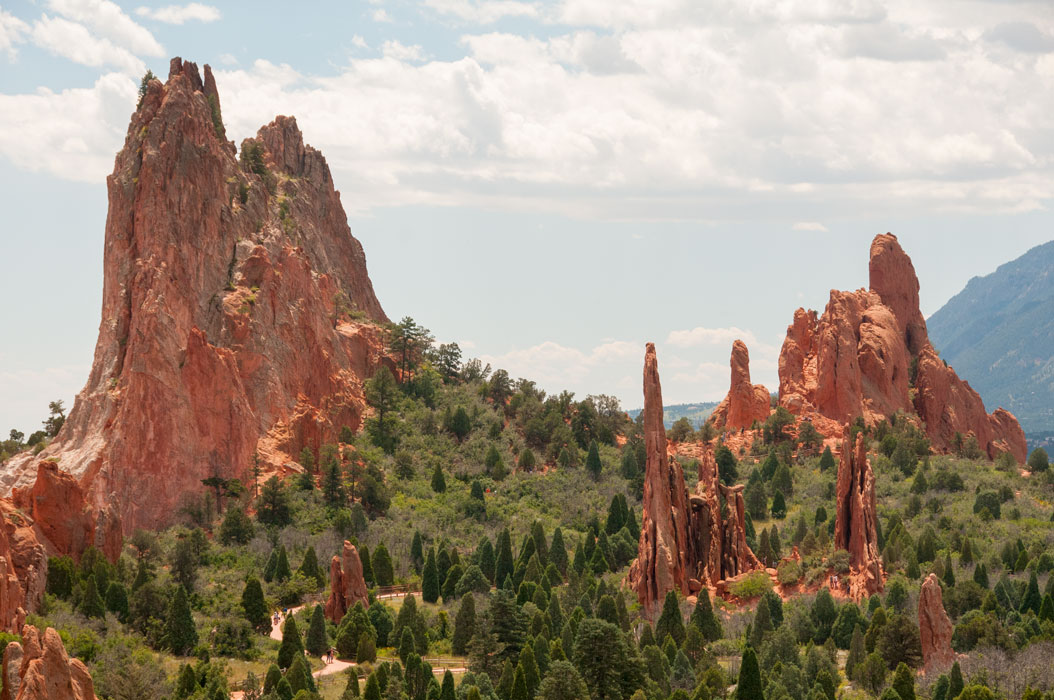
We met Barb’s sister Kathleen and her husband David for a nice lunch in a restaurant on the edge of Colorado Springs.  It was good to see them, but they had work-related commitments and so we were soon back on the road.  We stopped at the Garden of the Gods Visitor Center for a quick orientation before retiring to a motel — rain was predicted — from which we walked to a 20-plex movie theatre where we saw “Boyhood”.   Next morning we returned to the Garden and spent a leisurely time enjoying the fantastic formations.

Here is what Wikipedia says about the geology:

The outstanding geologic features of the park are the ancient sedimentary beds of deep-red, pink, and white sandstones, conglomerates and limestone that were deposited horizontally, but have now been tilted vertically and faulted by the immense mountain building forces caused by the uplift of the Rocky Mountains and the Pikes Peak massif. The following Pleistocene Ice Age  resulted in erosion and glaciation of the rock, creating the present rock formations. Evidence of past ages can be read in the rocks: ancient seas, eroded remains of ancestral mountain ranges, alluvial fans, sandy beaches, and great sand dune fields.

The resulting rocks had different shapes: toppled, overturned, stood-up, pushed around and slanted. Balanced Rock, a Fountain formation, is a combination of coarse sand, gravel, silica and hematite. It is hematite that gives the large balancing rock rock its red hue. It toppled off of a ledge, first resting on sand that was gradually worn away at the base. Gateway Rock and Three Graces are stood-up rocks that had been pushed up vertically. The Tower of Babel is Lyons Formation, a stone made of fine sand from an ancient beach.

When we left the Gardens we moved on to visit Barb’s sister Audrey and her husband Mike, who live in the Wet Mountains near the unincorporated community of Beulah, Colorado, near Pueblo.  Stay tuned for an account of that visit.

Visit to Kraskey’s — near Black Hawk, Colorado, August 26-28, 2014

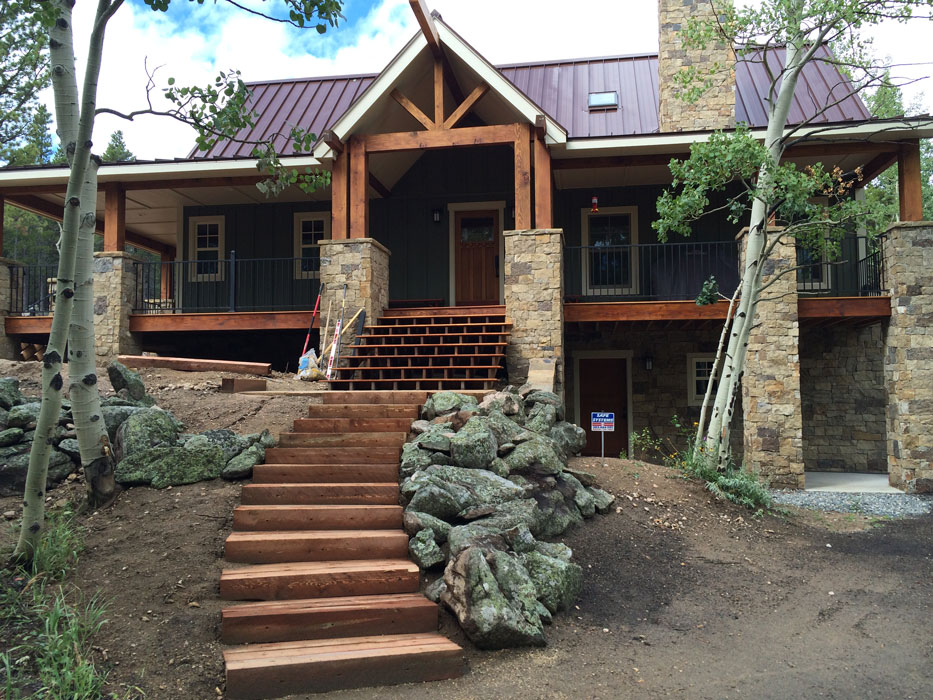
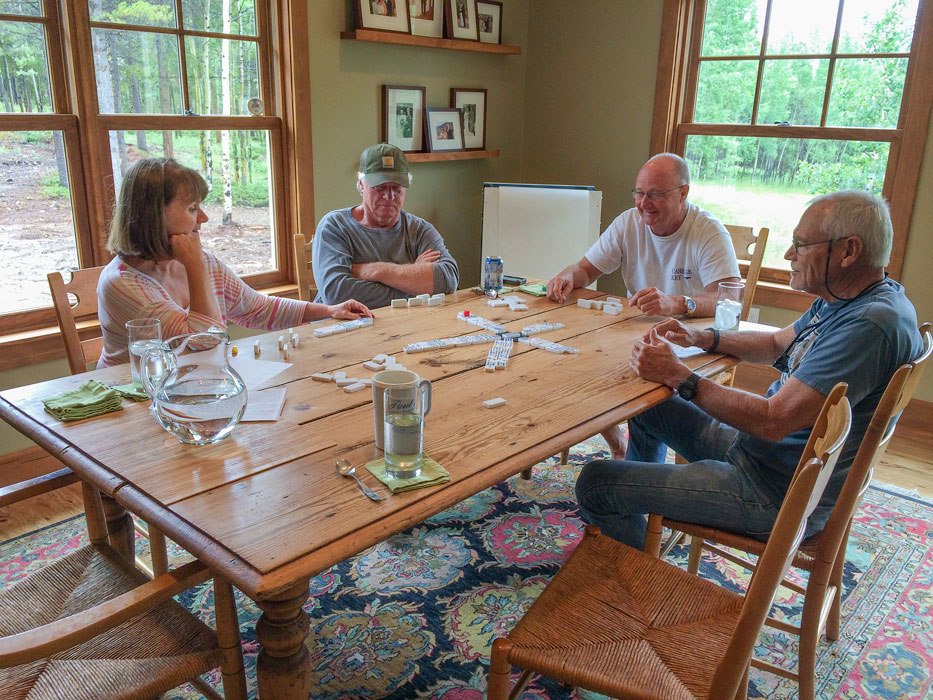
Delayed by a visit to a suburb of Boulder in order to get a “ping” fixed on the windshield of our newly beloved Camry, we did not get to the Kraskey’s spacious mountain homestead until noon on August 26.  The cabin is really impressive, so spacious and elegantly appointed, and Steve has done an incredible job of landscaping.  Mutual cruising friend John (Sojourn) arrived shortly before us, and after lunch we had all settled into a game of Mexican Train during which Linda demonstrated that she has not lost her touch.

Next day we all went for a walk over some of the 114 wooded acres of the property.  Afterwards Barb & I on one 4-wheeler and John on another explored additional paths through their forest.  Cruisers Kenny and Kathy (No Zip Code) joined us later that day, as did Dave (formerly Daniel Story), so we had quite the reunion.  Late in the afternoon of August 27 we all piled into vehicles and took pictures at the surprising “Yacht Club” sign, after which we went to a stretch of highway from where the profile of a “sleeping giant” could be seen on a distant mountain.  Then another gourmet meal prepared by Linda.  She is teased about her place being called Linda’s Bistro.  

Great fun to see old friends; we would have stayed longer and made ourselves pests, but we had commitments further down the road and had to leave on the morning of August 28.  Stay tuned for more about that.