Bonaire People-pics — January 9 – February 6, 2015

Bonaire – one of the premier diving locations in the Caribbean; indeed, in the world.   Not only due to the clarity of its waters, but also because of the diving infrastructure, a key component of which is the diving freedom available.   Wanna pick your own dive sites and pick your own times to dive?  No problem:  rent a pickup to drive along the western shore and pull over at one of the yellow stones used to mark the named sites.  Or arrive by boat and use to a dinghy to tie to one of the many dive moorings similarly marked.   Wanna use Nitrox to minimize fatigue or maximize bottom time?  No problem: Nitrox is available at the same reasonable price as normal air.

We have been doing a lot of diving with Roberta & Michael (Celilo), and so it seemed only fitting that I began this article with a reference to diving and began the photo section with pictures of us diving.  (Our next post will focus on some of the fish/creature pictures I have taken below the surface.)  But diving is not the only thing Bonaire has to offer.  We have also been socializing with old and new friends.  Indeed, our galley has almost fallen into disuse.   Old friends Pam and Don (Dorothy Ellen) were here until recently, and we joined them at a number of local eateries, including Burger Night at Zazu on Wednesday nights.  New friends, Ron and Nancy, who have homes in the States and also on the island, have also joined us for diving and dining at a whole host of locations.  (Not at the same time.)  They have introduced us to a number of restaurants and other experiences, including a remarkable wine tasting held, believe it or not, out of a shop located in two adjoining units of a storage facility.

On January 17 we all participated in a reef cleanup sponsored by the dive shop we use.  That evening the shop (Dive Friends, also known as YellowSubmarine) provided grilled chicken, fish and sausages at a cookout bountifully supplemented by potlucky dishes provided by the participating divers.

We got all spiffed up for an elegant dinner at Chez Madeliene.   Barb had jumped into our dinghy without any shoes and didn’t realize her mistake until we arrived at the marina where Ron & Nancy were to pick us up to give us a ride to the restaurant.  She decided not to go back for footwear.  No one seemed to notice.   We all enjoyed the meal so much we went back a week later to celebrate Mike & Roberta’s anniversary.  Barb wore shoes.

In other news, we realized shortly after we got to Bonaire that the water maker was not working correctly.  EchoTec helped me by phone and by using their suggestions I was able to conduct a series of re-plumbing experiments and determine that one of the three membranes was not working correctly.   They promptly sent a replacement at no charge, and after I installed the new one, we are happily making water at a lovely rate of 55 gallons per hour.

Our Trojan L16-HAC batteries began to fail after we got here.   We were down to 4 instead of the full complement of 8 when the new ones arrived.  The owner of the local gym, where Barb and I exercise almost every day, helped us find husky helpers to install the new beasts, which weigh in at 125 lbs. each.

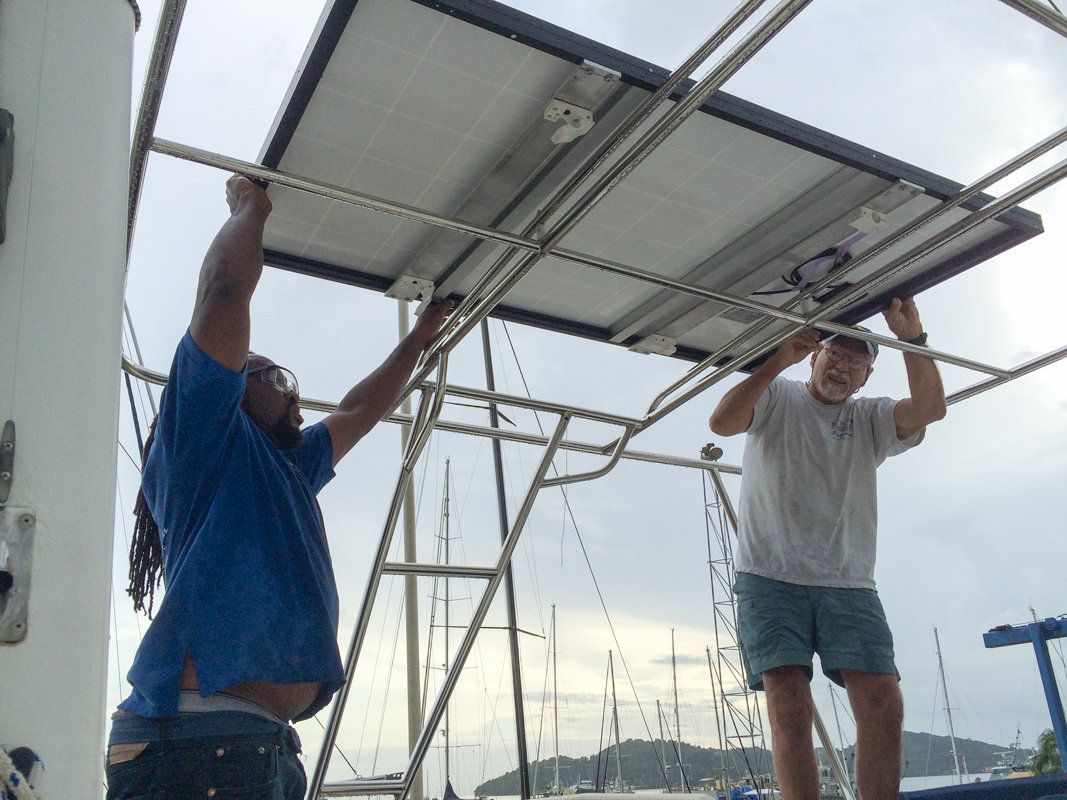
And speaking of batteries, we have found that with the new solar panels, we now need to run the generator for only a little over an hour every other day, so long as the weather is not too cloudy.   For those who have forgotten the details, we have 435 watts on the pilot house roof and 500 watts on the new T-top.

Bonaire — December 9, 2014 – January 8, 2015

To recap a bit:  we arrived in Bonaire on December 9, after a 51 1/2-hr passage west from Carriacou that took us through 408 nautical miles.  Two days later Mike and Roberta (Celilo) arrived, having followed the same route but having delayed their departure in order to wait for better sailing weather.

I arrived with a persistent head cold, and so our first dive was delayed until December 21.  Meanwhile, we got squared away with the dive shop, getting our discounted refill dive cards and paying our “nature fee” to the Bonaire National Marine Park. The Takks and Celilo rented a double-cab pickup and toured some of the island, visiting the salt flats to the south, the Lac Bay to the east (famous for its wind surfing), the Gotomeer salt water lake to the north, and further north, the entrance to the Washington-Slagbaai National Park and its associated museum.  We also stopped in the village of Rincon, where we visited the relatively new Cadushy distillery.

We have had a number of spectacular sunsets since we got here.  One night I captured a series of photos showing a green flash, reproduced here with absolutely no color manipulation.

Bonaire has changed since our last visit.  Cruise ships now appear several times a week.  There is a first class grocery store, just barely within walking distance from our mooring field, but not to worry:  there is a free shuttle at 5 pm two nights a week.  Most of our favorite restaurants are still alive and well; the Takks and Celilo and Don & Pam (Dorothy Ellen) had a fantastic dinner at Mona Lisa.  We had a great Christmas dinner on Celilo, and another on New Year’s Eve on Dorothy Ellen.  We have enjoyed playing cards with Celilo on a number of occasions, although Mike & I are convinced that the ladies are somehow cheating.  We have taken advantage on a couple of occasions of the “hamburger night” at the bar at Harbour Village Marina.

On Boxing Day the Takks and Celilo and Dorothy Ellen attended a concert at the Kralendijk Catholic Church, expecting a mostly Christmas-oriented performance.  The primary sponsor of the concert was the Bonaire Classical Music Society.  The pre-publicity had mentioned Antillean Classical Music, but that description had not prepared us for what turned out to be mostly of a marked “Scott Joplin-esque” nature.  One of the performers came onto the stage with an escort and a cane.  He was 84 years old, and was reportedly suffering from Chickungunya (hence the cane).  Remarkably, the affliction did not appear to have affected his ability to play the piano. The only Christmas music selections were provided by a choral group led by a different plodding pianist simultaneously providing exaggerated conducting gestures. 

During the performance we could hear occasional booms courtesy of the fireworks and firecrackers in the neighborhood.  As the week between Christmas and New Years wore on, the frequency and intensity of the explosions steadily increased, until on the night of New Years Eve, displays were visible from the deck of Dorothy Ellen for hours all up and down the west coast of Bonaire.  Of course, the “climax” was near midnight, but in fact the colorful and noisy bursts lasted much longer:  Later, back on TT2, I recall a prolonged outburst at about 3:30am.  Furthermore, occasional bursts of fireworks and firecrackers could be heard for days and days following New Years Eve.  We have never heard or seen anything quite like it.

On boat news, battery problems have reared their ugly heads a couple of times.  The generator battery totally died, and was replaced with one from the local Napa store when the local Budget Marine had nothing appropriate.  Then the house bank began acting funny, and I found in one of the 6-volt Trojan L16 a dead cell, so it and its pair had to removed from the bank, leaving a bank of “only” 1350 AH.

Barb and I joined a local gym and go in each morning for some exercise, characterized by a lot of aerobics and a little lifting.   Then we come back to the boat for a little rest and some lunch, and then take our dingy out for a dive, joined by Celilo in their dinghy.  We have spent a couple of dives searching in vain at a particular site for a reputed frog fish, but today Roberta & Barb each found (separate) sea horses at a different site, thanks to the advice offered by one of the employees at a dive shop, advice gained by virtue of a 4.5-mile walk by Barb in lieu of her morning gym workout.  Another win for the girls, with each of them winning the “chocolate sundae” prize for the “first to spot”.  Mike & Roberta are relatively new divers who have been extremely enthusiastic about the dives; it is fun to be with folks who share our passion.

Life is good.


Back in the Caribbean — Trinidad & Further, October 22 – December 9, 2014

We arrived in Trinidad on October 22 (from Miami, where we stayed for one day on our way back from Spain in order to collect stuff we had sent to a UPS store rather than schlep to Europe and back). 

Our time in Trinidad was to be one of unusual and large expenses.  Replacement of our anchor chain.  Replacement of our bimini with a new T-top capable of supporting two new solar panels.  Another solar controller for the new panels, and other associated enhancements.  Replacement of our water maker.  Two new chairs for the cockpit.  Stripping the bottom paint down to gelcoat and applying two coats of barrier paint before the application of the customary anti-fouling.  Replacement of the coolant in the genset and John Deere with the superior (and expensive) Cool-Guard II, and cleaning of the exchanger cores.

We had already, before leaving in July, received shipment of 340 feet of 3B galvanized chain to replace the rusty stuff in our anchor locker, so that improvement was already complete.

We had been in communication with Echotec  Marine, and expected them to begin their installation of a model 1200-Pro-3 water maker within a day or two of our return.  We were told that the technician was out sick, and that there would be about a week delay.  Then we were told that a technician had quit, and there would be a delay while a replacement was found.  Then we were told that the delay might stretch out indefinitely.  We went to see the president of the company, and he revealed that he had fired two technicians for stealing from Echotec in order to support their own moonlighting activities.  He said that he would provide expert advice and a bonus/compensation of a number of supplies, but that I would have to do the installation myself.  There was another delay while the components were being assembled and configured for our layout.  (An aside:  a technician had visited the boat before we left in July, and we thought the preparations were to be already completed by the time we returned in October!)  While waiting for the new parts, I completed the de-installation of the old and took the opportunity to sand and apply BilgeCoat to the intended area for the new.  Eventually, with the benefit of visits from the sole remaining technician for brief bits of advice, I did indeed complete the installation.  The result:  production of 50 to 55 gallons per hour; quite a step up from the nominal 17 gals. of the old Sea Recovery unit – with the emphasis on the word “nominal” since the actual production had usually been between 12 and 15.

Meanwhile, Mitchell of West Coast Fabrication began the task of removing the old bimini and installing the new T-top that would be strong and secure enough to support two 250 watt solar panels.  Carlos of Alpha Canvas was commissioned to install the canvas on the new T-top.  There were communication problems between the two, both at the design level and implementation level, with the result that the panel project took much longer than we had expected.  

While this was being sorted out I completed the internal wiring for the solar panels, adding another MPPT controller, a communications hub, a remote digital monitoring panel and breakers both in and out of the two controllers.  So the resulting installation looks like this:  three 145 watt panels on the pilot house, connected in series to a TriStar MPPT 45 watt controller in a cabinet in the pilot house; two 250 watt panels on the new T-top, connected in parallel (out of concern of shading issues from the mast and radar) to a TriStar MPPT 60 watt controller adjacent to the other controller, with both controller inputs and outputs protected by separate breakers mounted in a nice tidy breaker box.  Monitoring is convenient:  I mounted a remote digital TriStar meter (TS-RM-2) on the panel adjacent to the steps up to the pilot house, just under the Xantrex Link 2000-R battery monitoring display.  The TriStar meter can display and set parameters for either controller via a Morningstar MeterBus Hub which is also mounted in the cabinet with the controllers.

Using parts I had brought back with us, I completed a repair of the starboard stabilizer, replacing a worn pin on the knuckle end of the hydraulic ram.

We had ordered two new chairs – to replace one coming apart and to add an extra, bringing the total up to five, since we frequently run out of seats before room when entertaining friends in the cockpit.  When Barb went to Customs to claim the chairs, she was shocked to find that the agent would not permit them to come in duty free as boat parts for a vessel in transit.  Pictures of our cockpit did not prevail.  We ended up paying a whopping 45% duty/tax on the chairs.

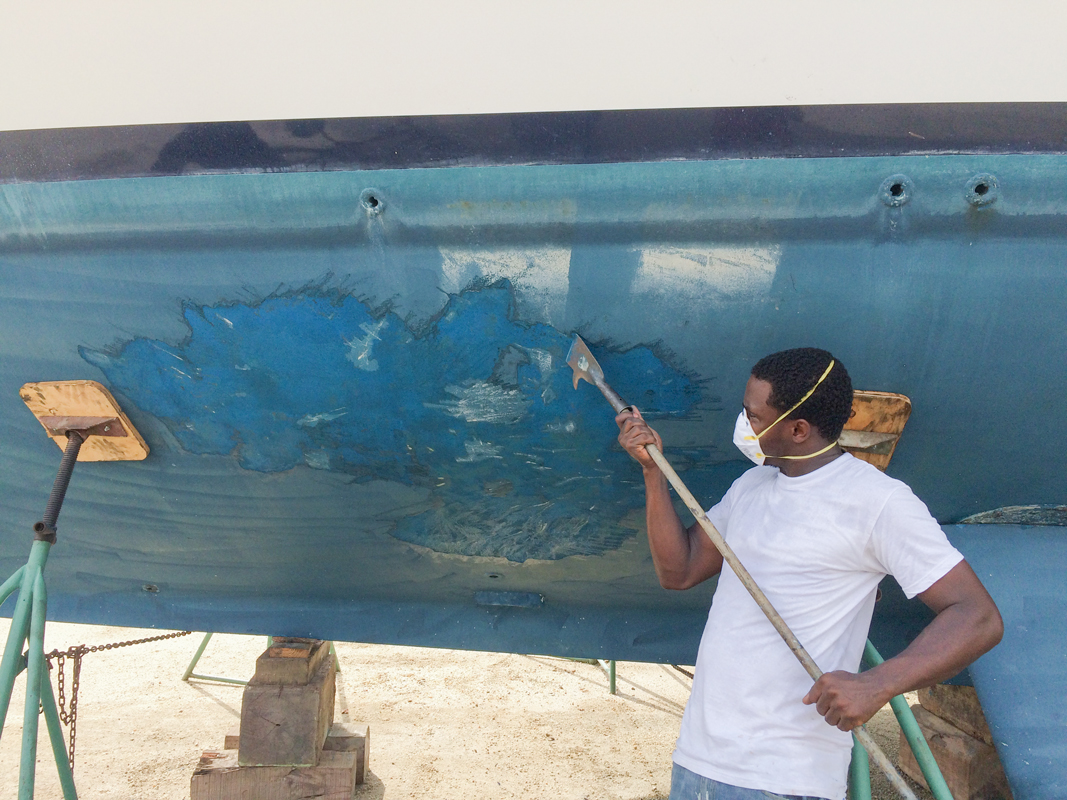
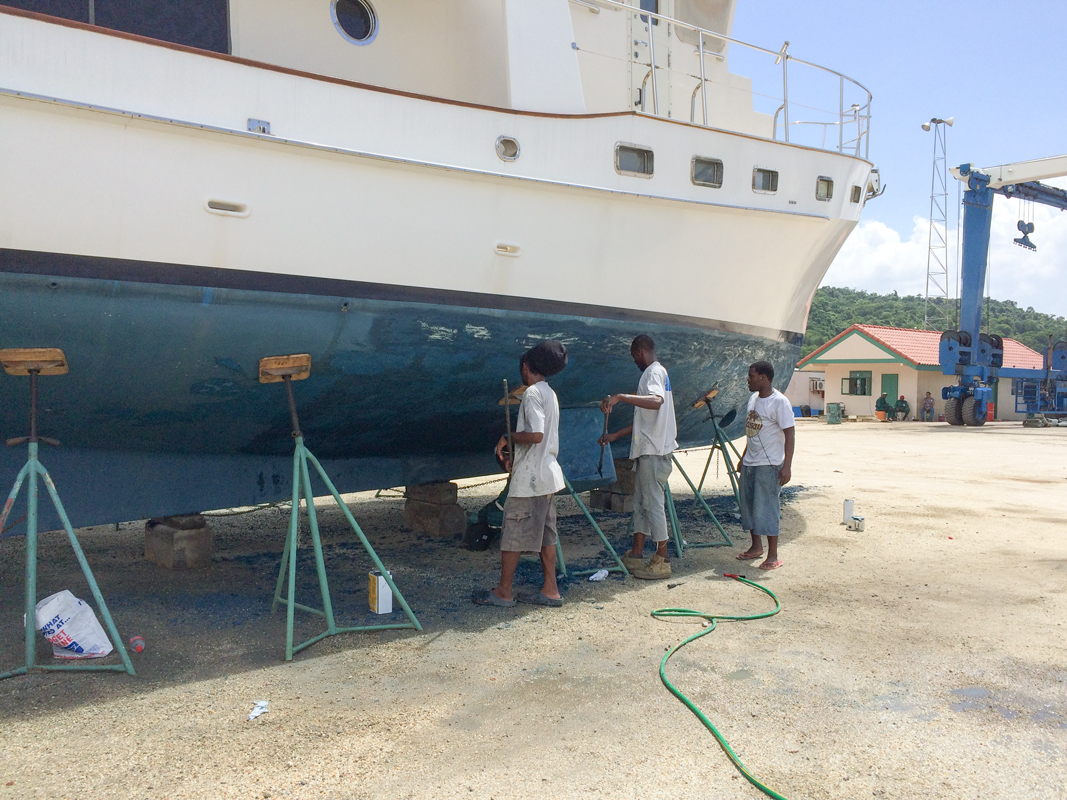
For the last several years I had noticed that portions of the bottom paint were peeling off in sheets.  Just prior to the application of new anti-fouling, I had been taking a putty knife and finding the loose sections and peeling them off by hand down to whatever the paint was when we took ownership.  Peake Yacht Services had been telling me that the paint was peeling simply because it was too thick; it was time to remove it all down to the gelcoat and start all over.  Aware of all of the other delays, and daunted by the number of new spots that were peeling, I decided to bite the bullet and OK the peel, thereby incurring another much-longer-than-expected project.  It turned out that the areas not peeling, and the few layers of paint in the areas that had peeled – that those areas were remarkably stubborn.   It took much longer to complete the peel than they had anticipated.  Fortunately, their bid was based on the job and not on the number of hours.

I drained the coolant from the genset and the John Deere propulsion engine and had the heat exchanger cores cleaned, replacing the coolant with new Cool Guard II.  Had a little trouble getting all of the air out of the John Deere system after the refill, but finally prevailed.

As we have done for each of the last several years, Barb and I applied PropSpeed to the propeller and rudder after all other bottom work had been completed.  Application technique is critical; the surfaces must be squeaky-clean and the slick second coat must be applied within minutes of the first etching coat. So application is a two-person job; there would be far too long a delay if the entire first coat were applied before the second began.  I apply the etcher to small areas and Barb follows with the second coat.  We are thinking of hiring ourselves out as PropSpeed applicators.

Of course, all was not work without play during our stay.  We went to the Wheelhouse Pub almost twice a week; once for their swordfish and once for their Bake ‘n’ Shark.  We went to several movies at Movie Town.  We joined a Jesse-sponsored trip to the Starlift pan yard where the Starlift and Tripolians bands performed, as well as a drum and dance group.  Food and beer were available, and we enjoyed the Shark ‘n’ Bake sandwiches and the corn soup.

On November 26 we finally splashed and tucked into a slip at Crews Inn.  Barb and Roberta (Celilo) organized a US-Thanksgiving theme for our friends at Crews Inn, with Barb providing a complete turkey and another turkey breast as well as the celebratory champagne.

We got a weather window earlier than expected, and left for Grenada early December 6.  Along the way we decided to not stop but to proceed directly to Carriacou, where Mike and Roberta were waiting for us to deliver a part.   We arrived at about 9 pm, and anchored in the dark at the rear of the pack.   On the way, the hydraulic system for the stabilizers had overheated, and we had to shut them down.  Our satellite phone system claims it cannot see the external antenna but by going out onto the foredeck I was able to make a call to a stabilizer technician who was convinced that the problem would have to be in the seawater supply to heat exchanger for the stabilizer hydraulic oil.  Next morning I found and removed debris in the seawater hose that supplies the stabilizer heat exchanger, and was so confident that I had solved the problem that we left Carriacou that same day in order to take advantage of what looked to be an almost-long-enough stretch of trawler weather for our uninterrupted passage to Bonaire.  Alas, two hours into the 408 nm, 51 ½ hr trip, the stabilizers once again overheated, and so we made the rest of the trip with an uncharacteristic amount of rolling.  Fortunately, the hull design of the Kadey-Krogen is particularly forgiving of following seas, and the waves were never too far off from 180 degrees.   Yes, we did a little lurching during the last 18 hours (since the first part of the trip was amazingly calm), but it was not nearly so bad as one might expect.

We arrived in Bonaire around noon and I enjoyed photographing the familiar and iconic sights (and sites) of the southern coast of Bonaire.  Alas, we both were stricken with head colds on our long passage, so as this is written we have yet to go diving.   But have no doubt; faithful readers will soon be inundated with pictures of our underwater adventures. 

Hills & Valleys — Casa Emilie & her surroundings, October 1-18, 2014

When we were not in a village on the immediate coast or up in the Sierra Nevada foothills, we were in the vicinity of Lars Helge’s & Tove’s villa, La Casa Emilie.  Faithful readers already know that we helped with their almond harvest; this post is to cover some of the many other things we did.

The villa is situated high on the backbone of a sloping ridge that separates the little village of Itrabo, down in the valley to the east, from the little villages of Jete and Otivar, deep down in the valley to the west.  The patio of the villa overlooks the spectacular view of the valley to the west and the looming hill/mountain ridge beyond.  On most days, when the wind is minimal, the quiet is eerie and absolute; “normal” noises do not reach the villa from the extremely distant valley or western ridge.  To be on the patio on such a day is to be in awe of the wonder of the sights and silence.

High as the villa is, it is only a fraction of the way up the ridge that slopes up to the south, a fact that becomes abundantly clear when one goes for a morning walk, as we sometimes did.  The peak is the southernmost before the Med, and so the vista over the coastal villages and the sea is well worth the effort.  At the very top is a jump off point for paragliders.

Almost all of the slopes of the hills in this region of Spain have been over the centuries sculpted with rows and rows of narrow terraces, upon which are grape vines and olive trees and, yes, almond trees.  This part of Spain is relatively dry, and so each plot of land has its own concrete water tank to support the agriculture and/or the associated dwellings.  The Brunborgs own two shares in the cooperative that supplies the water to the tanks of their region.  Their tank supplies all of the water they use to irrigate their grapes and almonds, as well as fill their swimming pool and meet their drinking, cooking, washing and flushing needs.  A water steward can often be seen traversing the dusty roads on his motorcycle in order to close and open valves that divert water to the appropriate tanks.  One of the delivery pipes buried under the road just down from La Casa Emilie has apparently sprung a leak, and the owner of the pipe has apparently refused to effect a repair, so when that pipe is transporting water to some tank or another, water bubbles up in the middle of the road and collects in a troublesome pool at a low point of the road.  Lars Helge & Rasmus seized the opportunity to do some playing in water and took shovels and hoes to the problem, digging a drainage ditch in which they buried a section of drainage pipe.  The lowering of the pool was only one aspect of the satisfied smiles on their faces.

The bottoms of the fertile valleys are crowded with trees and bushes that grow a wide variety of fruits, including Papaya, Persimmon, Quince, Oranges, Lemons, Avocado, and, most abundantly (and strangest to a boy from South Dakota), Custard Apples, known here as Chirimoya.  Some of these many fruits are grown in sprawling low “green houses” whose roofs are plastic sheets and whose sides are sometimes plastic and sometimes netting.

We patronized a number of local restaurants during our stay, two “new” ones and a reprise of our wonderful celebration at El Capricho Restaurant of Barb’s & Tove’s 60th birthdays in 2011.

We had an “interesting” drive on “interesting” roads one day when Lars Helge needed to check out one of his listed properties.  Fun to get off the main roads and see some of the backcountry.

As can be perceived by our series of posts on the subject, we had a grand time in Spain.  We look forward to seeing our Norwegian friends again when they come see us on Tusen Takk II.

Fun on the Southern Coast — Spain, October 4-18, 2014

During our stay with the Brunborgs we had a number of visits to some of the nearby coastal villages on the Mediterranean. We did most of our grocery shopping in Salobreña, where we also had at least three lunches. In one, our waiter spoke virtually no English. Quickly realizing the communication problem, he beckoned us to follow him through a couple of dining rooms to a display area of fish and shellfish on ice. There, without knowing the names or the flavors, we each picked out the fish we wanted prepared. After we had eaten our appetizers, the waiter came back and repeatedly asked some question in Spanish, using exactly the same words each time but increasing the volume on each iteration. Finally a customer in an adjoining table perceived the situation and came over and asked if we spoke English. When we indicated in the affirmative, he rendered the translation: were we ready for the next serving? We were.

We visited the resort town of Herradura, where Lars Helge familiarized himself with a luxurious (and expensive) home that he hopes to help sell to Norwegians. At his request I took a number of pictures to be used to supplement the illustrations of the dwelling on the web site for the Realty Company.

We also visited Almuñecar, with its maze of narrow streets and alleys, a number of times. We had several lunches there, and patronized the huge indoor market that featured many stands with an infinite variety of fruits and vegetables. A separate area contained many separate seafood stands with fish and shellfish of every possible description. Adjacent to the large market was a huge covered open-air area that hosted medicinal and flavoring spices and herbs. All in all, the market was a marvelous place filled with interesting sights and smells and boundless opportunities for people-watching.

If I may say so, the associated beaches of these villages are not nearly so appealing as many in the Caribbean. The sand is dark and coarse and filled with stones and pebbles. The water is cold. There were few people on the beach. Ourselves? We didn’t swim, but contented ourselves to brief tests a la toe-dips.

Exploring Spanish villages — Sierra Nevada foothills, October 15, 2014

On October 15 we all (Lars Helge & Rasmus & Kari & Barb & I) crowded into Lars Helge’s car and drove up into the foothills of the Sierra Nevada mountains.  Our goal was to visit the three villages of Pampaneira, Bubión and Capilera.  We made two additional stops along the way.  We noticed an intriguing sign/display for the village of Soportújar.  A white wall bore a large model of the village and also displayed a black silhouette of a witch.  We could not resist diverting to the village to seek an explanation.  At the village, we found a handsome patio that featured a stunning view of the valley below.  On the patio was a fountain in the form of a statue of a boiling pot being stirred by two witches.  Just outside the village was a decorative entrance to a cave that apparently was named “The Eye of the Witch”.  Signs apparently averred that the cave has long been thought to have mysterious powers.  A quick poll revealed that none of us felt any magical vibrations, and so we continued on our way.  Back on the road to the three villages, we soon passed a small cavern.  At the entrance there was a very small hut whose function was unclear.  The inside was clear but featured walls that appeared to have seams of coal.

We passed through Pampaneira and then Bubión and stopped at Capilera, where we ordered “caffè Americano”, which comes in small cups and contains about a week’s supply of caffeine.  The setting was nostalgic, since we had been there with a large number of Norwegian celebrants in the “First International Almond Festival” in October, 2006.

We then reversed our direction and returned to Pampaneira, population 355 and 3480 feet above sea level, where we did some exploring of the village and its many interesting shops, including leather goods and wool rugs and ceramics and fashionable clothing and cheeses and hams.  An interesting factoid not immediately apparent is that the chimneys in the three villages are unique.  Whereas the chimneys in most villages have horizontal cross-sections that are polygonal, most of those here are circular or elliptical.  Fascinating, no?

After a yummy lunch we retraced our steps back to home territory, dropping off in Itrabo Kari and Rasmus, who had invited us over to their rented villa for dinner, and then continuing on to Casa Emilie.

When we joined them later for dinner, we found a multi-level restored home that featured thick plastered walls and lots of charming little rooms and a lovely patio on the roof..  The dinner of fish and pasta was delicious and was accented by some really good wines.

Harvesting Almonds — Spain, October 1-18, 2014

Lars Helge & Tove have a villa up on a ridge that separates the little village of Itrabo from the little village of Jete.  On their property they have some 70 almond trees; trees which made it possible to legally build their villa “Casa Emilie”, since housing is permitted on rural land in this part of Spain only if it is associated with some kind of farm.

The almonds were especially bountiful this year, and so we began our harvest by picking some of the nuts on some of the loaded lower branches.  The alternative method of harvest is to spread a large plastic sheet under a tree and then beat the branches with long sticks to dislodge the nuts and cause them to fall onto the plastic sheet, from which the nuts can then be “poured” into large collection baskets.  When an almond is still “green”, the nut is encased in an outer leathery husk.  As the nut matures, the outer husk dries up and cracks open and falls off the nut, leaving the hard almond shell with which the reader is no doubt familiar.  If one attempts to harvest too soon, many of the nuts will still wear their leathery husks.  If one waits too long in an effort to have all of the husks shed from the nuts, many of “naked” nuts will have fallen to the ground.  So the ideal time to harvest is when almost all of the almonds either are “naked” or are wearing dried husks that can be easily removed but few nuts have fallen to the ground. The advantage of the picking method is that the collected nuts are free from debris and the slightly adhering husks can be easily removed while picking.  The advantages of the “beating with a stick” method is that it is faster and that it dislodges the nuts that are too high to be reached by hand.  The disadvantage of the stick method is that it collects on the plastic sheet not only clean nuts and nuts with easily removed husks but also immature nuts with irremovable husks and also leaves and twigs and old husks.  So the stick method requires a separate step that we performed by dumping the baskets onto a table and then manually sorting the nuts from the debris.  After a day or two of easing into the harvest by picking by hand, we switched to the stick method.

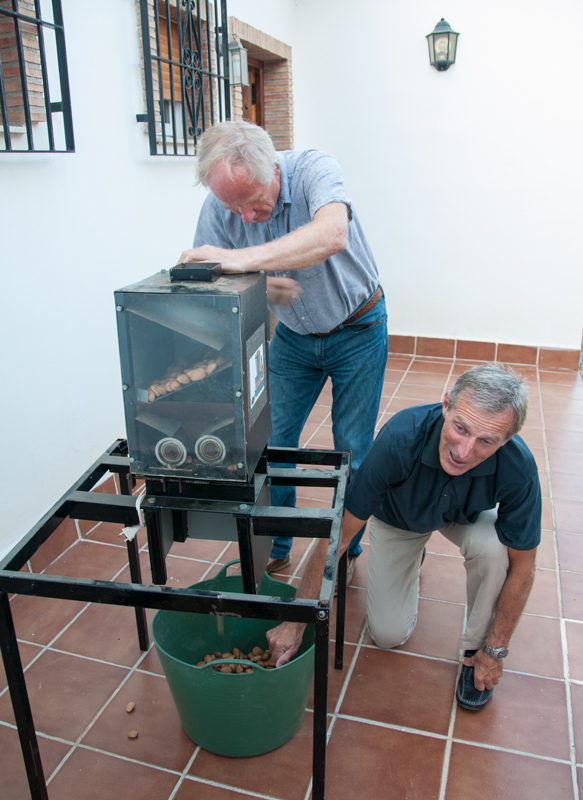
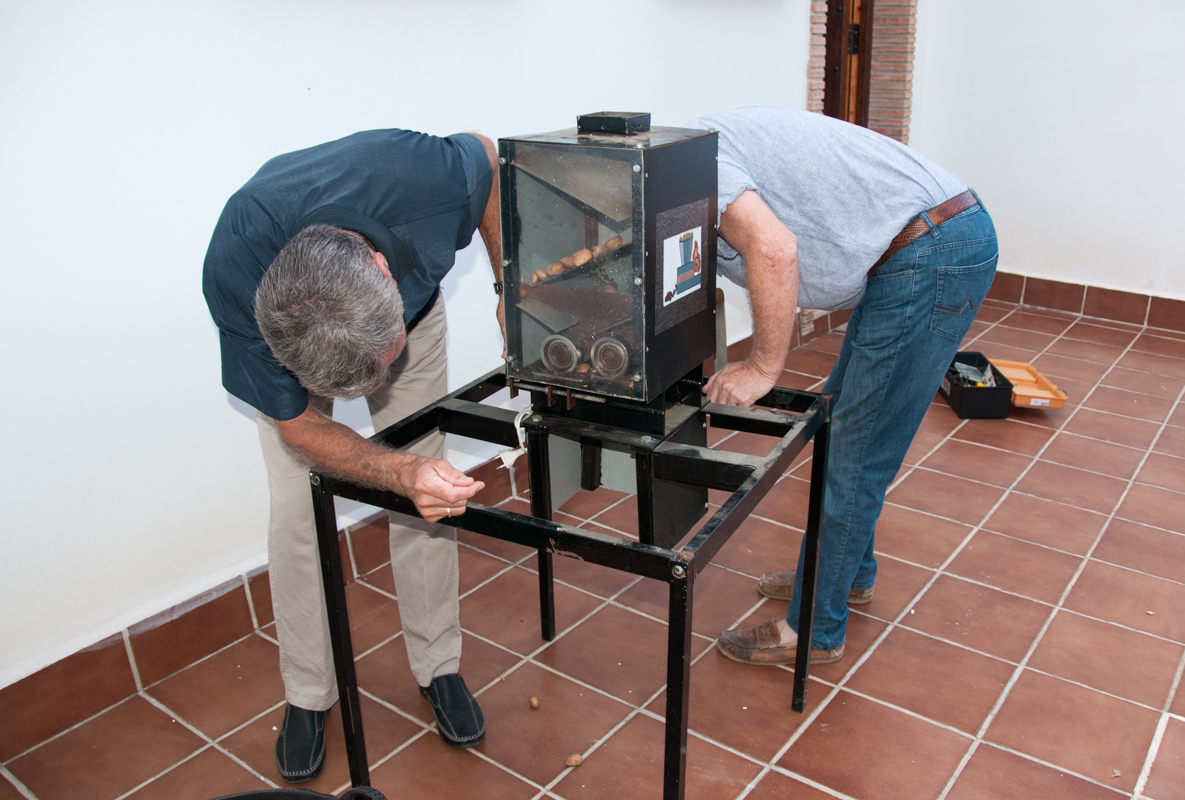
As faithful readers already know, in the middle of the harvest we took a break and took Tove to the Malaga airport and then continued on to Gibraltar.   When we returned, we continued the harvest until about 55 trees had been stripped.  Then we took another break and waited for Norwegian friends Rasmus and Kari to arrive and help us with the last 15 trees.  When the harvest was complete, we had about 341 kg. of almonds, almost all of which were taken to an almond broker and sold.  A few were retained for shelling in the machine that Lars Helge had commissioned several years ago from a technical school in Kristiansand that was looking for a project.  The machine is supposed to crack the shells without breaking the inner nuts.  The “problem” is that not all the almonds have the same dimension, and so some smaller nuts pass between the shell-cracking rollers without being shelled, and some larger nuts fall out with not only their shells broken but also their nuts crushed.   (I wish I could think of another way of saying that which didn’t cause half of our readers to wince.)

This was our third almond harvest.   We enjoy the process.  We enjoy the setting.  We enjoy working with friends.

Stay tuned for the next post when we discuss what we did when we were not harvesting almonds or visiting Gibraltar.


Rock of Gibraltar — October 12, 2014

On October 12, Barb & I travelled west from the Itrabo/Almuñecar region of southern Spain, driving the Brunborg’s new-to-them Ford through pissing rain, as our Canadian friends are wont to say, and transporting Tove to the Malaga airport so that she could return to Norway for a post-operation checkup of an eye that had been treated for glaucoma.  After dropping her off we continued west in order to visit Gibraltar.  We parked in the Spanish city of La Linea and walked across the border to Gibraltar, where we engaged a tour guide. There was a delay after we entered the van, since one of seven scheduled daily flights was using the airstrip that crosses perpendicularly the only road that enters the crowded British territory of Gibraltar.

Our tour took us up precipitous one-way roads with stops to see St. Michael’s Cave, the Siege Tunnel, a monument for the Pillars of Hercules with a vista southward toward Africa, which miraculously was visible owing to the cessation of the rain.  We also got a glimpse of the exterior of the ancient Moorish Castle as we drove by.  The tour’s turn-around point was near the top of 1,398 ft high monolith, where we spent some time with one of the sub-bands of the 300 Barbary macaques that populate the territory.  Our tour ended back in the city of Gibraltar, where we had a late lunch before beginning our long drive back to Itrabo.

Pillars of Hercules

According to Greek mythology when Hercules had to perform twelve labors, one of them (the tenth) was to fetch the Cattle of Geryon of the far West and bring them to Eurystheus; this marked the westward extent of his travels.   According to some Roman sources,while on his way to the garden of the Hesperides on the island of Erytheia, Hercules had to cross the mountain that was once Atlas. Instead of climbing the great mountain, Hercules used his superhuman strength to smash through it. By doing so, he connected the Atlantic Ocean to the Mediterranean Sea and formed the Strait of Gibraltar. The two mountains created by the split taken together have since then been known as the Pillars of Hercules

The northern pillar is the Rock of Gibraltar and the southern pillar has been identified as Jebel Moussa (Musa) in Morocco, although a corresponding North African peak not being predominant, the identity of the southern Pillar has been disputed through history,with the other candidate being Monte Hacho in the Spanish city of Ceuta on the northern coast of Africa.

Galleries and Great Siege Tunnels

A unique feature of the Rock is its system of underground passages, known as the Galleries or the Great Siege Tunnels. The first of these was dug towards the end of the Great Siege of Gibraltar, which lasted from 1779 to 1783. The commander of the garrison throughout the siege was anxious to bring flanking fire on the Spanish batteries in the plain below the North face of the Rock.  He had a tunnel bored from a point above Willis’s Battery to communicate with the Notch, a natural projection from the North face. The plan was to mount a battery there. There was no intention at first of making embrasures in this tunnel, but an opening was found necessary for ventilation; as soon as it had been made a gun was mounted in it. By the end of the siege, the British had constructed six such embrasures, and mounted four guns.

The Galleries were a later development of the same idea and were finished in 1797. They consist of a whole system of halls, embrasures, and passages, of a total length of nearly 997 ft. From them, one may see a series of unique views of the Bay of Gibraltar, the isthmus, and Spain.

The Rock of Gibraltar is a monolithic promontory. It is a deeply eroded and highly faulted limb of an overturned fold. The sedimentary strata comprising the Rock of Gibraltar are overturned (upside down) with the oldest strata overlying the youngest strata.  Although the original geological formations were deposited during the early part of the Jurassic Period some 175-200 million years ago, their current appearance is due to far more recent events of about 5 million years ago. When the African tectonic plate collided tightly with the Eurasian plate, the Mediterranean became a lake that, over the course of time, dried up. The Atlantic Ocean then broke through the Strait of Gibraltar, and the resultant flooding created the Mediterranean Sea.

Today, the Rock of Gibraltar forms a peninsula jutting out into the Strait of Gibraltar from the southern coast of Spain. The promontory is linked to the continent by means of a sandy strip with a maximum elevation of about 10 ft. To the north, the Rock rises vertically from sea level up to 1,350 ft at Rock Gun Battery. The Rock’s highest point stands 1,398 ft above the strait at O’Hara’s Battery. The near-cliffs along the eastern side of the Rock drop down to a series of wind-blown sand slopes that date to the glaciations when sea levels were lower than today, and a sandy plain extended east from the base of the Rock. The western face, where the City of Gibraltar is located, is comparatively less steep. Calcite, the mineral that makes up limestone, dissolves slowly in rainwater. Over time, this process can form caves. For this reason the Rock of Gibraltar contains over 100 caves.

St. Michael’s Cave

St. Michael’s Cave, located halfway up the western slope of the Rock, is the most prominent and is a popular tourist attraction. The upper chamber has been turned into an auditorium illuminated with ever-changing colored lights.  Gorham’s Cave is located near sea level on the steep eastern face of the Rock. It is noteworthy because archaeological excavations in the cave have found evidence that Neanderthals used it as far back as 30,000 years ago.

Moorish Castle

The Moorish Castle is a relic of the Moorish occupation of Gibraltar, which lasted for 710 years. It was built in the year A.D. 711. The principal building that remains is the Tower of Homage, a massive building of brick and very hard concrete. The upper part of the tower housed the former occupants’ living apartments and Moorish bath.

Barbary Apes

The Barbary Macaques may have originated from an escape of North African animals transported to Spain; it is also possible that the original Gibraltar macaques are a remnant of populations that are known to have spread throughout Southern Europe during the Pliocene, up to 5.5 million years ago.

Second World War onwards

When World War II broke out in 1939, the authorities evacuated the civilian population to Morocco, the United Kingdom, Jamaica and Madeira so that the military could fortify Gibraltar against a possible German attack. By 1942 there were over 30,000 British soldiers, sailors, and airmen on the Rock. They expanded the tunnel system and made the Rock a keystone in the defense of shipping routes to the Mediterranean.

Georgia on My Mind, Part Two — Cumberland Island; September 26-28, 2014

On the afternoon of September 26, we drove down to the southeastern corner of Georgia  near St. Marys.  We were soon joined by daughter Danielle and her girls Kristen and Abby.  We met at the headquarters of the Crooked River State Park, where we would spend two nights in a commodious cabin in order to facilitate a visit to Cumberland National Park, located on Georgia’s largest and southernmost island.  Click here to see the Park Service map of Cumberland.

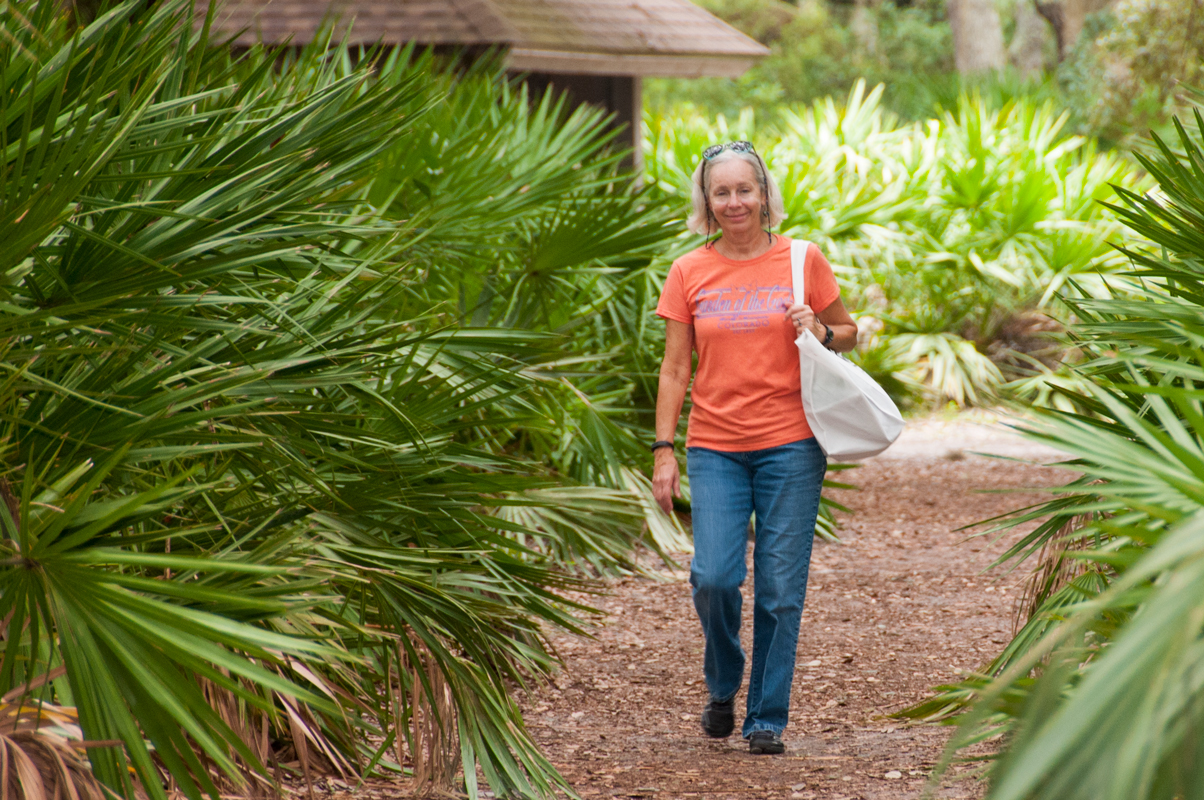
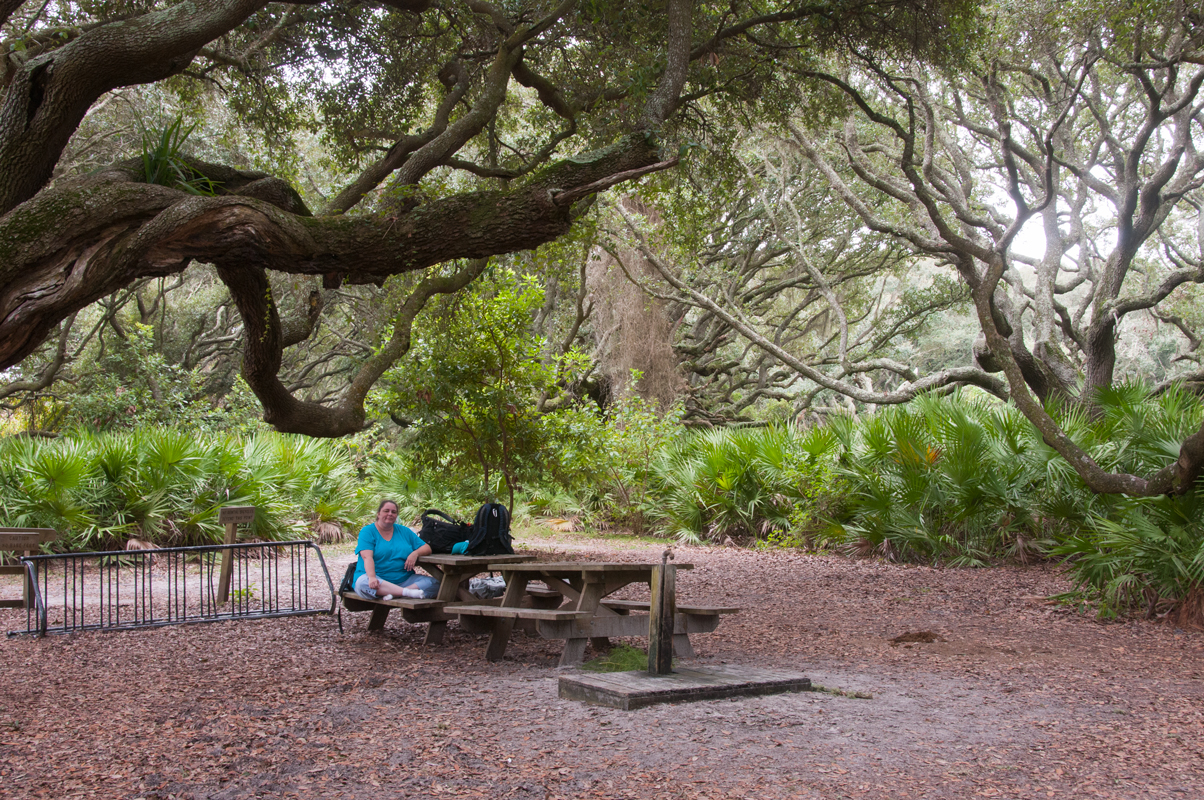
The island has three major ecosystem regions. Off the western edge of the island there are large areas of salt marshes. On land, a dense maritime forest with gnarled live oak trees covered with Spanish moss.  Below the oaks,  an understory of palmetto plants.  Cumberland Island’s most famous ecosystem is its beach, which stretches over 17 miles. The island is home to many native interesting animals, as well as non-native species. There are White-tailed deer, squirrels, raccoons, armadillos, wild boars, alligators, and wild turkeys as well as many marshland inhabitants. It is also famous for its feral horses roaming free on the island.

On the morning of Sept. 27, after a breakfast in St. Mary’s, we boarded the Park Service ferry to travel the tannen-stained tidal waters of St. Marys River to the lee side of Cumberland Island.  We have been to Cumberland many times, but it has never lost its appeal.  We got off at the dock at the Sea Camp Ranger Station and walked along the forested path to the southern dock at the Ice House Museum, and then to the ruins of the Carnegie estate known as Dungeness.

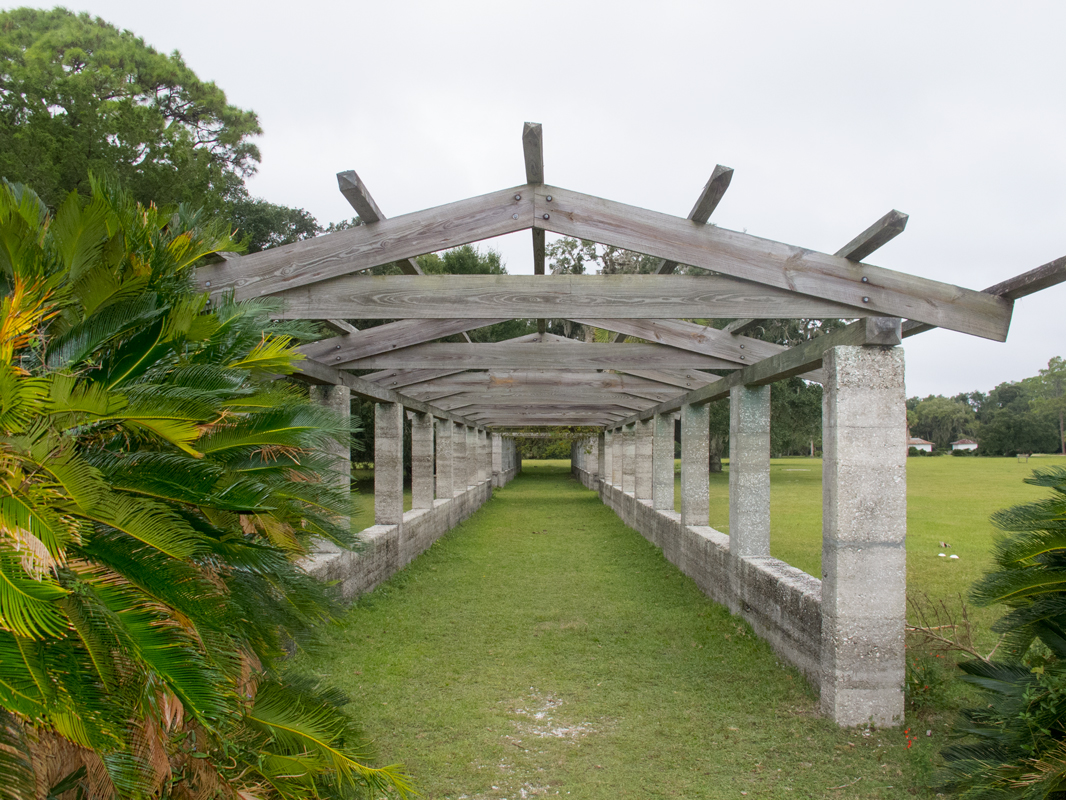
In the 1880s Thomas M. Carnegie, brother of steel magnate Andrew Carnegie, and his wife Lucy bought land on Cumberland for a winter retreat. In 1884, they began building a mansion on the site of Dungeness, though Carnegie never lived to see its completion. Lucy and their nine children continued to live on the island.  Dungeness was designed as a 59-room Scottish castle. They also built pools, a golf course, and 40 smaller buildings to house the 200 servants who worked at the mansion. The last time Dungeness was used was for the 1929 wedding of a Carnegie daughter. After the Crash and the Great Depression, the family left the island and kept the mansion vacant. It burned in a 1959 fire.

From Dungeness we proceeded across the island to the beach, along which we walked northward and through huge flocks of Royal Terns and seagulls to the Sea Camp Beach, where we rested and explored before crossing back to the Sea Camp Ranger Station in time to catch the 4:45 ferry back to St. Marys.  All told, our fitbits reported that we had walked about 4 miles.

Next morning, as we prepared to leave Crooked River State Park, Danielle noticed a couple of birds high up in a dead tree next to our cabin.  “Get your camera!” she said.  When I did I was surprised to see a Roseate Spoonbill and a Wood Stork patiently waiting to have their pictures taken.  Good eyes, Danielle!

Georgia on My Mind, Part One — Savannah & Rincon; September 22-30, 2014

As usual, our visit to the Savannah area was a mixture of fun, friends, family and fall visits to doctors.  Barb and I saw our skin doctor and our optometrist, where we conceded that our ten-year old Lasik surgeries had finally expired:  we both needed and got eyeglasses.  Barb had her annual mammogram.  (I decided I didn’t need one.)  We updated our wills.  I got a haircut, an operation that would not normally warrant any comment.  Barb usually cuts my hair, since we are normally on our boat.  So I have no “usual” barber in the Savannah area.  Barb had an errand to run, so I thought I would drop into the next barber shop we saw and get it cut while she ran off to do her thing.  We found one in Pooler called “Beauty & Barber”.  I walked in, and found that the two barbers were African American, as was the female waiting patiently for a “beauty” customer.  The chief barber invited me to sit down, and said he would get to me next.   Both barbers were busy cutting the hair of African American customers.  Their hair was being close-cut.  Very close-cut.  Patterns were being cut into their hair:  curly lines completely shorn of any covering.

When it was my turn, the chief barber introduced himself as “Pop”, and asked how I wanted my haircut.   I said I only wanted the sides and back shortened a little, with very little taken off the top.  (I have migrated away from the buzz cut that I sported in earlier years, and rather like the longer look.)  Pop asked if I wanted the sides tapered. I responded in the affirmative, visualizing the alternative as a style that would look as if a bowl had been placed on my head and only the hair below the rim of the bowl had been shortened.  When Pop made his first cut, I knew I had made a mistake, but that it was too late.  He started in front of my ear and made a cut that extended all the way down to my skin in depth, and extended all the way up the side of my head in length.   And then for 20 agonizing minutes he worked on the sides and back, pushing down firmly and repeatedly, until the areas were every bit as short as that of his former customer.  And then, mindful of at least of a bit of my initial request, he  took only a little too much off the top.  The total cost:  only $10 dollars.  When I exited the shop, I found Barb waiting for me in the car.  She found my appearance and the broad smile on my face to be more than a little contradictory, but hey, if one cannot laugh at oneself …

We drove out to our old stomping grounds near Richmond Hill, and were relieved to see that our former home was in much better shape than the last time we checked up on it.  A mile further down the road is Ft. McAlister Marina, where the new owners have further enhanced the docks and the associated restaurant.

We had lunch with Dick & Karen Munson.  We had lunch with Steve & Beth Ellis.  We had lunch with Joy Reed.  We had dinner with Mike & Iris Dayoub.  We spent a lot of time with our daughter Danielle and her two girls Abbie & Kristen, including a multi-day trip to extreme southern Georgia to spend some time at Cumberland Island – a trip that deserves its own blog.  (See the next post.)

All of these activities left us with a sense of accomplishment and a sense of satisfaction – it is good to take care of life’s responsibilities and great to see friends and family.